
How to Do Self Care as a Woman: Easy Ways to Get Started

Learning how to do self care as a woman over 50 doesn’t require a spa budget or a weekend away. When I first started looking for self care tips, I thought taking time for myself was a luxury I simply didn’t have anymore. Between managing a career, supporting adult children, and noticing new aches in my joints, my own needs always slipped to the bottom of the list. However, I soon realized that neglecting myself wasn’t a badge of honor; it was a recipe for burnout and deteriorating mental health.
I’ve learned that self-care is not about being selfish; it’s about being sustainable for the people who rely on us. It’s the daily maintenance that keeps our engines running so we can show up with energy and patience. These eight self care ideas for women changed my life, and they don’t require a retreat or a massive budget.
In this deep dive, I’m going to show you exactly how to do self care as a woman in a way that feels manageable. We aren’t aiming for perfection or an aesthetic lifestyle; we’re aiming for a version of you that feels rested and grounded. By learning to prioritize yourself and starting small, you can reclaim your peace without adding more stress to your already busy schedule.
Key Takeaways
- Prioritizing quality sleep is the foundation of your energy, mood, long-term health, and hormonal balance.
- Supporting your mind and body with simple daily habits like mindfulness, fresh air, and hydration can help reduce stress and improve your physical health.
- Deepening your connection to yourself through journaling, tech-free time, and planning ahead can support setting boundaries and bring more clarity and emotional well-being.
- Scheduling time for yourself, along with engaging in creative outlets, is essential to maintaining balance and treating your well-being as a true priority.
Get Your Free Self Care Guide
30 DAYS OF SELF CARE IDEAS AND TRACKER
Sign up to become an insider so you stay up to date on all the happenings…and get a FREE Self Care Guide that has 30 days of ideas and a daily tracker so you can stay on track with your self care.
Why Prioritizing Sleep Is Your Foundation
If you are wondering where to begin your journey, start with your pillow. Sleep is the single most important factor in our long-term health, yet many of us treat it as optional.
For us women over fifty, hormonal shifts and changes in reproductive health can disrupt rest, but consistent sleep is vital for reducing cortisol and managing inflammation. I used to pride myself on being a night owl, but my body finally told me enough was enough. Now, I view 7 to 9 hours of sleep as a medical necessity rather than a treat.
Starting these healthy habits doesn’t have to be a massive overhaul. I suggest going to bed just ten minutes earlier tonight. Over a week, those ten minutes can grow into thirty, eventually shifting your entire rhythm.
To help your brain transition, prioritize better sleep hygiene by turning off all electronic devices at least an hour before you want to be asleep.
Support Your Mind and Body with Daily Habits
The mental load of being a woman is heavy, and meditation is the best way I have found to set that load down. You do not need a perfectly quiet room or an empty mind to succeed at this. While I love self-care treatments like yoga and meditation, even simple mindfulness can change your mental health for the better.
I often use the box breathing technique when I feel my heart rate rising during a stressful phone call or a busy afternoon to aid in stress reduction. You start by inhaling for four counts, holding for four, exhaling for four, and holding again for four.
This rhythmic breathing acts as a physical reset button for your nervous system. It tells your body that you are safe and that the fight or flight response is not necessary. This is a core part of a daily self-care routine for women over 50 because it provides immediate relief.
Sometimes, I also use a meditation app to stay consistent. Many are free and offer beginner-friendly sessions, from a few minutes to longer guided meditations. The Calm app is a great option—I use the free version, and the paid plan isn’t necessary unless you’re ready to commit to a regular routine.
You can also try the following to help calm your mind:
1. Step Outside to Find Your Grounding
There is something profoundly healing about the natural world that a gym or an office just cannot replicate. I make it a point to spend at least ten minutes outside every single day, regardless of the weather.
Whether it is a brisk walk through a local nature preserve or just sitting in my garden with a cup of tea, the sunlight and fresh air help me recharge and refresh my mind. While walking at the park or a local zoo, I find it is a great way to incorporate regular exercise.
2. Stay Hydrated for Better Health
We often overlook the simplest things, but drinking enough water is a high-impact act of self-care. As we age, our thirst signals can become less reliable, making it easy to slip into chronic dehydration. This leads to fatigue, joint pain, and even confusion. While a balanced diet is key, addressing hydration is the first step to avoiding fatigue linked to nutritional deficiencies.
A better way to calculate your needs is to aim for half your body weight in ounces. For example, if you weigh 150 pounds, you should aim for about 75 ounces of water daily. This is one of the most practical wellness tips for women our age, as the results are almost immediate.
Deepen Your Connection to Yourself
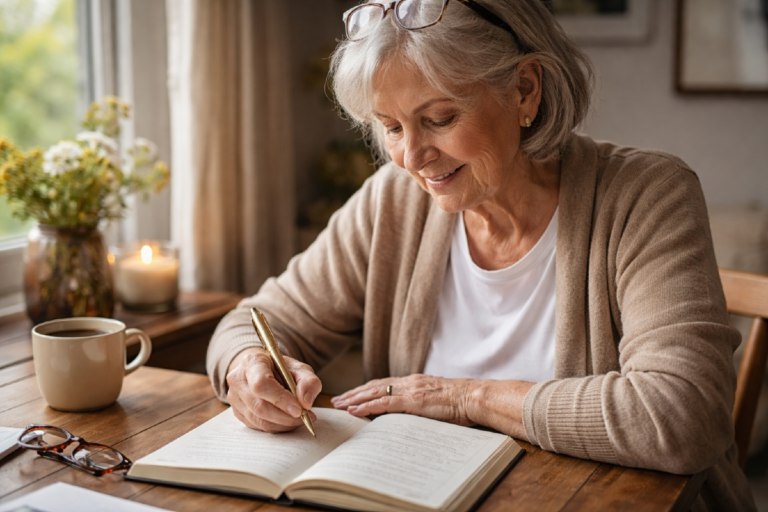
Journaling is often misunderstood as a dear diary exercise for teenagers, but for me, it is a professional-grade problem-solving tool. Putting a pen to paper allows me to untangle the messy thoughts that keep me awake at night. It is much harder for a worry to remain massive and scary once it is captured in ink on a page. I use journaling to practice gratitude and find inner peace.

You do not need a fancy leather-bound book to do this effectively. A simple spiral notebook or a private digital notes app works perfectly. The key is to be honest with yourself and let the words flow without judging your grammar or your feelings to improve your overall mental health.
Here are a few other effective ways to connect with yourself:
1. The Freedom of Tech-Free Time
Our modern world is designed to grab our attention every second of the day. Between smartphones, rolling news cycles, and social media, our brains are constantly overstimulated. This digital noise makes it very difficult to hear our own intuition or feel truly present in our lives. I have started practicing small windows of tech-free time to combat this.
Taking a social media break is part of an effective self-care routine that combats chronic stress. When you remove the constant input, you start to use your five senses to examine the world around you. You will notice the scent of the rain, the texture of your clothes, or the specific way the light hits the trees. Being present is a skill that requires practice, but it is the ultimate antidote to modern anxiety.
2. Start Tomorrow Today by Planning Ahead
Nothing fuels late-night anxiety quite like a mental list of everything that needs to happen tomorrow. I found that a 60-second planning session the night before empties my brain so I can actually rest. I write down the top three things I must accomplish, which gives me a sense of direction before my feet even hit the floor in the morning.
This is not about creating a massive to-do list that makes you feel overwhelmed. It is about deciding what matters most so you do not waste energy on decision fatigue. When you have a plan, you stop reacting to everyone else’s emergencies and start acting on your own priorities.
Make an Important Date With Yourself
If you had a meeting with your boss or a high-value client, you wouldn’t just skip it because you felt busy, would you? We need to treat our daily routine with that same level of professional respect. I have started blocking off time on my calendar for reading, taking a nap, or going to the gym. Once it is on the schedule, it is a firm commitment I have made to my own health. Think of this scheduled time as preventative medicine for your soul.

Scheduling this time is more than just a logistical win; it is a declaration of your self-worth. It tells your family and yourself that your needs are legitimate and non-negotiable. This is how we move from trying out self-care to actually living a balanced life. These moments of rest are where we integrate the life lessons learned after 50 and find the strength to keep growing.
Common Questions About Starting Self-Care
Getting started can feel overwhelming, so I have gathered some of the most common questions I hear from women in our community.
How do I find time for self-care when my life is already too busy?
The trick is to stop looking for extra time and start looking for transition time. Five minutes of deep breathing while your coffee brews or ten minutes of reading before you pull out of the driveway after work counts. You do not need a whole afternoon; you just need intentional moments. If you are struggling significantly, seeking professional support is also a form of self-care.
Does self-care have to be expensive or involve spa trips?
Not at all. Most of the most effective habits, like walking, drinking water, and getting enough sleep, are completely free. Expensive products can be fun, but they are not the heart of true well-being. Real care is about how you treat yourself every single day.
How long will it take before I start feeling better?
You might feel a sense of relief the very first time you take a deep breath or go to bed early. However, the most profound benefits come from consistency. After about two weeks of prioritizing these basics, most women notice improved mood, better digestion, and more stable energy levels, which all contribute to positive mental health.
These simple starters are the building blocks of a flourishing life. You do not have to do all eight at once to see a difference. Pick the one that sounds the easiest or most appealing to you and commit to it for one week. You deserve the same care and attention you so freely give to everyone else in your life.
Conclusion
My journey with self-care has taught me that we are not meant to pour from an empty cup. By prioritizing rest, clearing your mind, and connecting with nature, you are investing in your emotional well-being and the woman you are becoming. These habits are not just nice to have; they are the tools that allow us to live with vitality, joy, and overall well-being.
If you are looking for specific ways to pamper yourself on a budget, you might enjoy my post on self-care products under $20. I would love to hear which of these self-care ideas you are planning to try first. Please leave a comment below and share your favorite ritual with our community!









Such a beautiful post! I love how you’ve simplified these tips and made them so easy to digest for someone who is new to self-care. Thank you so much for sharing!
Love this post! I went on a self-date for the first time last year and it was so freeing and empowering to do it! Great post! Sleep is definitely important
YES YES and YES. These are great tips- especially the screen free time.