My Word of the Year for Me (2026 Reset)
It’s 2026, and the year is already in motion. Some days I feel fired up. Other days I feel behind, even when I’m doing my best. If you’re in that same mixed place, I get it.
That’s why I’m skipping the long list of resolutions this time. Resolutions can turn into a pile of “shoulds” fast. Instead, I’m choosing one steady guide, a simple word I can carry into my real life, not an imaginary perfect one. That’s the heart of a word of the year for me.
In this post, I’ll walk you through a quick process you can do in one sitting, share examples that make it feel easier, and show you how to actually use your word all year, even when motivation dips.
Key Takeaways Before I Pick My Word
- One word beats a crowded goal list because it’s easier to remember on a busy Tuesday.
- A good word matches how I want to feel and how I want to act, not just what I want to finish.
- My word can shift over time, because I’m allowed to learn and adjust.
- The best words work like a decision guide, helping me choose what’s a yes and what’s a no.
- Small habits beat big plans, because consistency has more power than intensity.
- If I’m not sure yet, that’s okay. Uncertainty can be the starting line, not a stop sign.
If you want a deeper version of this practice, my older post on selecting your powerful word of the year is still a comforting read, and it pairs nicely with the updated steps below.
How I Choose My Word of the Year, Step by Step

I treat this like a mini workshop. I grab a notebook, set a timer for 25 minutes, and keep it simple. Then I come back later if I need to.
Your word isn’t a verdict on who you are. It’s a direction for where you’re headed.
Step 1: Look Back at Last Year and Name What I Want Less of
Before I pick a word, I name what I’m done carrying. I don’t judge it. I just write it down.
A few quick prompts that help me:
- Where did I feel stressed more than I wanted?
- What kind of clutter kept stealing my time (stuff, tabs, commitments)?
- Where did people-pleasing cost me peace?
- When did I say yes, then regret overcommitting?
- What drained my energy or made health feel harder?
- What sparked money worries, even small ones?
My honest example: last year, I said yes too quickly, then rushed through my own evenings.
When I finish this step, I usually see a theme. That theme points toward the kind of word I need.
Step 2: Picture My Best Ordinary Day and Pull Out the Words Hiding in it

Next, I imagine a day that’s realistic, not a vacation. In my best ordinary day, I wake up without rushing. I drink coffee or tea slowly. I move my body in a way that feels kind, like a walk or stretching. Work (or home life) has a clear rhythm, with breaks that keep me steady. Meals are simple and nourishing. I connect with someone I love, even in a small way. Then the evening winds down on purpose, not by accident.
After I write that vision, I circle the feeling-words hiding inside it: calm, steady, brave, nourish, simplify, connected.
Then I remind myself: the word should feel like a direction, not a demand. If it sounds like a bossy order, I keep looking.
Step 3: Test my Top 3 Words With a “Decision Filter”
Now I pick three finalists and run a quick test. For each word, I answer:
- If my word is ___, what would I say yes to?
- What would I say no to?
- What would I do when I’m tired?
Two mini examples:
If my word is Wellness, I might say yes to meal prep, strength training twice a week, and doctor appointments I’ve delayed. When I’m tired, I’d choose the “good enough” healthy option, not perfection.
If my word is Boundaries, I might say yes to protected mornings, fewer last-minute favors, and honest conversations. When I’m tired, I’d pause before replying and ask, “Do I have capacity?”
I also like reading how other women frame their guiding word, especially in midlife. This piece, A Midlife Reset: choosing one word, captures that practical, real-world tone well.
At the end, I choose one main word. If I keep a second word, it must have a clear job, like “Ease” as the mood and “Focus” as the method.
Step 4: Turn My Word Into One Sentence and One Tiny Daily Habit
Here’s my fill-in template:
“This year I choose ___ so I can ___.”
Then I attach one tiny habit. Tiny means I can do it on a bad day.
A few ideas that fit almost any word:
- 2-minute stretch after I get out of bed
- Fill and prep my water bottle
- 10-minute tidy of one small area
- Text one friend a real check-in
- 5-minute budget glance (no shame, just data)
- Set a bedtime alarm
- Plan the week on Sunday for 10 minutes
- Step outside for fresh air after lunch
Small, doable, repeatable. That’s how a word becomes real life.
How I Keep My Word Alive All Year (Especially When I Fall Off Track)
I’m not trying to “stay on track” like a robot. I’m trying to come back faster when life gets loud.
Make it Visible, Then Build a Simple Monthly Check-In
First, I make my word hard to ignore. A few easy options:
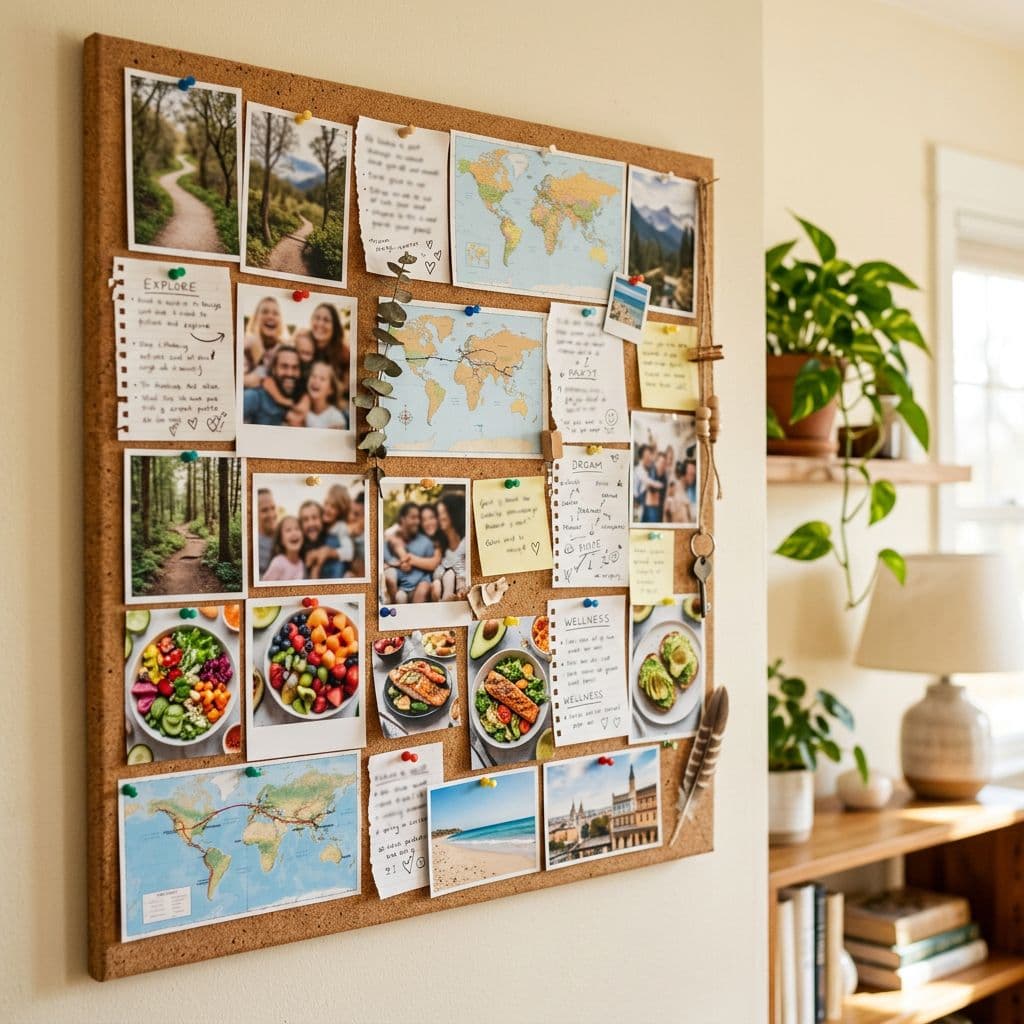
Phone lock screen, sticky note on the mirror, journal cover, calendar header, a bracelet, or a small vision board.
Then I do a 15-minute check-in once a month. I answer three questions:
- What worked well with my word?
- What drained me most?
- What is one next step that matches my word?
That’s it. Simple questions, honest answers, no drama.
Plan for Hard Weeks: My “Reset in One Hour” Routine
Hard weeks happen. Travel, family stuff, work crunch, hormones, sleep, all of it. When I feel scattered, I do this one-hour reset:
- 10 minutes: breathe, then write one messy page
- 15 minutes: move (walk, stretch, light weights)
- 15 minutes: clear one small space (a counter, a bag, a drawer)
- 20 minutes: plan the next 3 days, just the basics
I use my word like a compass, not a grade. The goal is not perfect. The goal is back to center.
FAQs About Choosing a Word of the Year
What if I pick the wrong word?
I won’t. I’ll pick the word I need now, and I can learn as I go.
Can my word change midyear?
Yes. If my life changes, my word can shift too. Growth isn’t a failure.
What if I want more than one word?
I choose one main word, then one support word only if it has a clear role.
Do I need goals too?
Goals help, but my word tells me which goals matter. It keeps my “why” close.
When should I pick it if January is gone?
Any day works. If I want ideas to spark my list, this roundup of word of the year ideas for 2026 can help me brainstorm quickly.
Conclusion
Choosing a guiding word gives me clarity when life feels full. It helps me make calmer choices, and it nudges me toward small actions that add up. Most importantly, it gives me a way to restart without shame.
If you’re ready, choose your word today using the steps above. Then write your one sentence, and pick one tiny habit you can actually keep. I’d love to hear it, share your word in the comments so we can cheer each other on all year.