Benefits of Self-Care Every Woman Over 50 Needs to Know
I spent many years running on a treadmill that never seemed to stop. For a long time, I believed that my value was tied directly to how much I could do for everyone else, and my mental health often took a back seat to my productivity. I always put myself last behind my kids, my work, and my home.
It was only recently that I realized this way of living was not sustainable or particularly kind to myself. The benefits of self-care reach far beyond pampering. We often treat it as a luxury we might get to after the chores are done, but I am here to tell you it is actually a health necessity. If we do not make the time to recharge and rejuvenate our spirits, we simply will not have enough left to share with the people we love most.
Transitioning into our fifties brings its own unique set of shifts, from physical changes to emotional transitions. I’ve learned that self-care is unselfish because taking care of my mind and body helps me manage the life I was given.
Key Takeaways
- Prioritizing your needs supports your mental health while helping to prevent burnout and manage the physical stresses of midlife.
- Learning to say no protects your limited energy and improves your relationships.
- You don’t need a spa day to practice self-care because ten minutes of quiet can change your whole mood.
- When you value yourself enough to rest, your self-esteem naturally begins to rise.
Get Your Free Self Care Guide
30 DAYS OF SELF CARE IDEAS AND TRACKER
Sign up to become an insider so you stay up to date on all the happenings…and get a FREE Self Care Guide that has 30 days of ideas and a daily tracker so you can stay on track with your self care.
Advantages of Having a Self-Care Routine
I used to think that by putting myself first, I was failing the people around me. The truth is actually the opposite.
When we fill our own cups, we finally have the emotional capacity to connect deeply with our romantic partners, friends, and family. We are not just showing up; we are showing up as our best, most present selves.
Establishing a consistent self-care routine creates a sense of stability that ripples out into our social lives. Clear communication combined with firm boundaries does not push people away. Instead, it teaches others how to respect your time and energy.
Better Relationships Through Personal Care
Healthy connections require us to be balanced individuals. If I am exhausted and resentful, I cannot be a supportive partner or a fun friend.
Prioritizing yourself gives us the patience to listen and the energy to engage, which is essential when you want to nurture relationships with your loved ones. It allows us to be active participants in our lives rather than just spectators of our own fatigue.
Earning Respect With Firm Boundaries
Setting boundaries is often the hardest part of any wellness journey. I have learned that when you set boundaries, it is a form of self-respect that others eventually mirror.
Choosing to set boundaries is an act of reclaiming your personal power, and it is the most effective way to lead a balanced life. When you treat your time as valuable, the people in your life will start to treat it that way too.
Consistency Beats Intensity
A routine does not have to be a two-hour ordeal. It is the small, daily anchors that keep us steady. Whether it is a simple daily self-care routine or just a few minutes of breathing, consistency is what builds lasting change. These brief, intentional moments are the building blocks of your overall well-being.
Boosting Your Self-Esteem and Confidence Every Day
There is a profound psychological shift that happens when you finally decide you are worth the effort. For many of us, confidence takes a hit as we age and our roles change.
When I started making time for meditation, gratitude journaling, and reading self care inspirational quotes, my internal voice softened. This shift proved crucial for protecting my mental health and guarding against depression and dark moods.
This is the quiet power of self-care. When you treat yourself with kindness, you project a sense of worth that changes how the world interacts with you. Activities like moderate exercise also build a sense of mastery and accomplishment that brightens your daily outlook.
We often feel guilty for saying no to requests for our time, but that guilt is usually a signal of low self-worth. Practicing emotional self-care helps us make authentic choices about our time and energy, aligning our outside actions with our inside values. This leads to a life that feels both honest and fulfilling.
Expanding Your Social World and Improving Mood
Entering our fifties is an incredible time to rediscover who we are outside of our professional or parental roles. Pursuing new interests doesn’t just pass the time; it makes us much more interesting people to be around. When I picked up a new hobby, it gave me something fresh to talk about and a new spark in my eyes.

Getting out and trying something new is one of the best ways to meet people who share your passions. Whether it’s a local gardening club or a pottery class, these shared activities create natural bridges to new friendships.
Remember, it’s about expanding your world and remembering that life is still full of first-time experiences.
Managing Life’s Stress and Improving Your Physical Health
Life at fifty and beyond comes with physical challenges we simply cannot ignore. Menopause, achy joints, and a changing metabolism are all part of the journey, which is why learning to manage stress becomes so critical at this stage.
Pairing regular exercise with colorful, healthy food and adequate sleep creates the foundation for strong physical health and a long, happy life. I have found that exercise is much more about mood management than fitting into a certain dress size. A walk in fresh air or a gentle yoga flow clears the mental cobwebs and helps reduce stress and anxiety.
When we eat well, move often, and rest properly, we are investing in our future independence. It is about having the strength to play with grandchildren or the stamina to travel the world. We are not just adding years to our lives; we are adding life to our years.
The Power of Self-Knowledge and Managing Your Emotions
We live in a world that is incredibly loud. Between social media, constant advertisements, and the 24-hour news cycle, it is easy to lose track of our own quiet inner voice. Developing self-awareness creates the silence needed to strip away labels given to us by others and find mental clarity through our own truth.
Managing emotions in a healthy way means moving away from self-sabotaging habits. We have all reached for an extra glass of wine or overspent on things we do not need just to numb a hard day. True self-care replaces these temporary fixes with actual solutions, teaching us to sit with our feelings rather than run from them.

When we understand our emotional patterns, we can choose better responses. Reflecting on our experiences and life lessons puts current emotions into perspective and builds the kind of emotional maturity that helps us handle life’s ups and downs with more grace and less drama.
Building Your Personal Emotional Toolbox to Build Resilience
We will inevitably experience negative emotions, and that is simply part of being human. The goal of self-care is not to be happy 100 percent of the time, but to cultivate a toolbox of healthy coping mechanisms that protect your emotional well-being and prevent stress from dictating your quality of life.
If self-care strategies are not enough to manage overwhelming struggles, please remember that seeking professional help is a sign of strength, not weakness.
This emotional resilience leads to an authentic life. You move through your daily life with quiet power, knowing you can handle whatever comes your way and that your peace is not dependent on everything going perfectly around you.
Quick Self-Care Routine You Can Do
Sometimes we just need a few ideas to get started. Here are some simple practices that I have found particularly helpful when I need a quick reset:
- Mindful Morning Coffee: Spend five minutes drinking your coffee without a phone or TV, just noticing the warmth and the quiet.
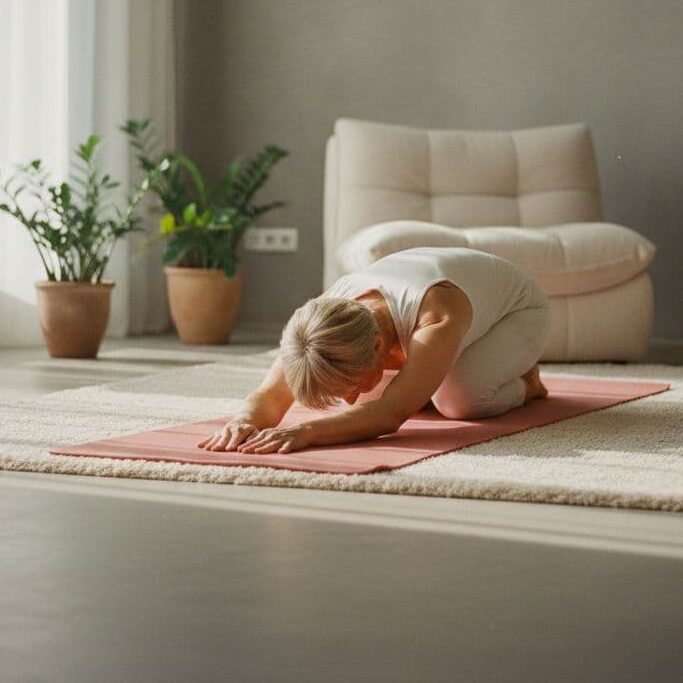
- Ten-Minute Stretch: Release the tension in your neck and shoulders with some gentle, floor-based stretches before bed.
- The Three-Breath Reset: In the car or at your desk, take three deep, intentional breaths, practicing mindfulness to tell your nervous system that you are safe.
- Sunset Walk: A short ten-minute walk as the sun goes down can help transition your brain from do mode to rest mode.
- Digital Sunset: Turn off all screens an hour before bed and read a physical book or listen to calming music instead.
Frequently Asked Questions
Is it too late to start a self-care routine at fifty?
It is absolutely never too late. In fact, our fifties might be the most important time to start because our health and emotional needs are shifting. Establishing a consistent self-care routine today will pay huge dividends for your future well-being.
How do I stop feeling guilty when I take time for myself?
Think of self-care as a necessary part of your responsibilities. Just like you have to put gas in a car for it to drive, you have to put energy into yourself to show up for your family.
Does self-care have to be expensive?
Not at all. The most effective forms of self-care, like deep breathing, taking a walk, or journaling, are completely free.
You can also explore spiritual self-care, such as meditation or quiet nature walks, to center yourself without spending a dime. It is about the intention you bring to the activity rather than how much money you spend.
How much time should I dedicate to self-care each day?
Even fifteen minutes of intentional care can make a difference. You do not need a whole afternoon, and these small pockets of time can actually boost productivity by helping you reset your mind.
Start with a small amount of time that feels manageable so you can stay consistent with the habit.
Start Caring for Yourself Now, So You Can Better Care for Others
Many of us in our fifties are caring for aging parents while still supporting adult children, and these responsibilities in our daily life can leave us feeling emotionally and energetically drained. Prioritizing your emotional well-being ensures you never run dry, which ultimately supports the overall well-being of everyone who depends on you.
One of the greatest benefits of self-care is how it helps you reduce stress and anxiety, giving you more patience and love to give. Taking time for yourself is not a withdrawal from your family; it is an investment that benefits everyone around you.
What small acts of self-care have made the biggest difference in your life? Leave a comment below and share your practices with our community!