Fiber for Women Over 50: Your Daily 21-Gram Goal
A sluggish afternoon, uncomfortable bloating, and irregular bathroom trips can make you feel unlike yourself. Sometimes the answer isn’t another complicated wellness plan. It may be a gentle food-based habit, such as fiber for women over 50, added gradually and consistently.
After 50, my approach to food is less about rules and more about steady support. Fiber is one of those small daily choices that can help you feel more comfortable, full, and cared for in your own body.
Key Takeaways
- A daily fiber intake of about 21 grams is the general goal for women age 51 and older.
- Dietary fiber from beans, fruit, vegetables, seeds, and grains is a nourishing place to start.
- Soluble fiber supports cholesterol and blood sugar control, while insoluble fiber helps keep stool moving through the body.
- Increase fiber slowly, and drink more water as you do.
- A supplement can help fill a gap, but it shouldn’t replace nourishing meals.
The 21-gram recommendation is a useful daily target, not a pass-fail test. One fiber-rich choice at a time still counts.
How Much Fiber for Women Over 50 Is Enough?
The general recommended amount for women age 51 and older is 21 grams of fiber per day. That’s slightly lower than the 25-gram recommendation for women ages 19 to 50, making it a useful daily fiber intake guide rather than a universal medical prescription. Mayo Clinic’s fiber guidance also lists 21 grams as the daily goal for women past 50.
I like to think of that number as a friendly guidepost. Ordinary plant foods provide dietary fiber, so you don’t have to weigh your blueberries or turn dinner into a math problem. Start noticing which foods bring fiber to your plate, then build a few into your normal routine.

Why the Target Drops After Age 50
The recommended amount changes because calorie needs often decline with age. Perimenopause and menopause, medications, lower activity, and not drinking enough can also affect digestion. These changes may make constipation more likely and bowel movements less regular.
If you already eat more than 21 grams and feel good, there is no reason to pull back. Your daily fiber intake can be higher when it supports your body without creating discomfort. Fiber-rich foods may also support fullness and weight management, but they don’t promise weight loss.
Soluble and Insoluble Fiber Both Matter
Soluble fiber mixes with water and forms a gel-like texture in the gut. Oats, beans, apples, citrus, chia seeds, and flaxseed are familiar sources, and some provide prebiotic fiber that may nourish beneficial gut microbes, though not every fiber source has the same effect. It may help lower low-density lipoprotein (LDL) cholesterol, support heart health, and slow the rise of blood sugar levels after meals. Harvard’s guide to dietary fiber explains these potential benefits in more detail.
Insoluble fiber adds bulk to stool and helps material move through the gastrointestinal tract. You’ll find it in whole grains, brown rice, leafy vegetables, nuts, and the skins of pears and apples. Your digestive system needs both types for normal digestion, and whole foods naturally provide a mix.
High-Fiber Foods That Fit Real Life
You don’t need specialty powders or a pantry full of unfamiliar ingredients to reach your fiber goal. These high-fiber foods provide dietary fiber in familiar forms you may already enjoy: lentils, black beans, oats, berries, popcorn, pears, broccoli, avocado, and whole-grain bread.
For more ideas that support energy and heart health, keep a list of healthy foods for women over 50 nearby when you plan groceries. When the week gets busy, familiar food wins.

Start With Breakfast
Breakfast is an easy place to build your fiber routine. A bowl of oatmeal topped with raspberries and chia seeds gives you a meaningful start. Whole-grain toast with peanut butter and a pear works beautifully, too.
I don’t believe breakfast needs to be picture-perfect. Choose one upgrade you enjoy and repeat it until it feels automatic, helping build your daily fiber intake over time.
Make Lunch and Dinner Work Harder
At lunch, add chickpeas or black beans to a salad, soup, or grain bowl. Dinner might be lentil soup with a slice of whole-grain bread, or brown rice alongside roasted vegetables and salmon.
Choose whole grains in bread or toast when practical. Aim for at least half your grains to be whole grains when you can. A can of beans in the cupboard can save dinner, add staying power, and give your gut health some support at the same time.
Increase Fiber Without the Bloating
If your daily fiber intake is low, don’t leap from a few grams to 21 overnight. Dietary fiber needs time to adapt in your digestive system, and increasing too quickly can worsen constipation. Add one change for several days, such as fruit at breakfast or beans at lunch. Then add another, aiming for comfortable, regular bowel movements.
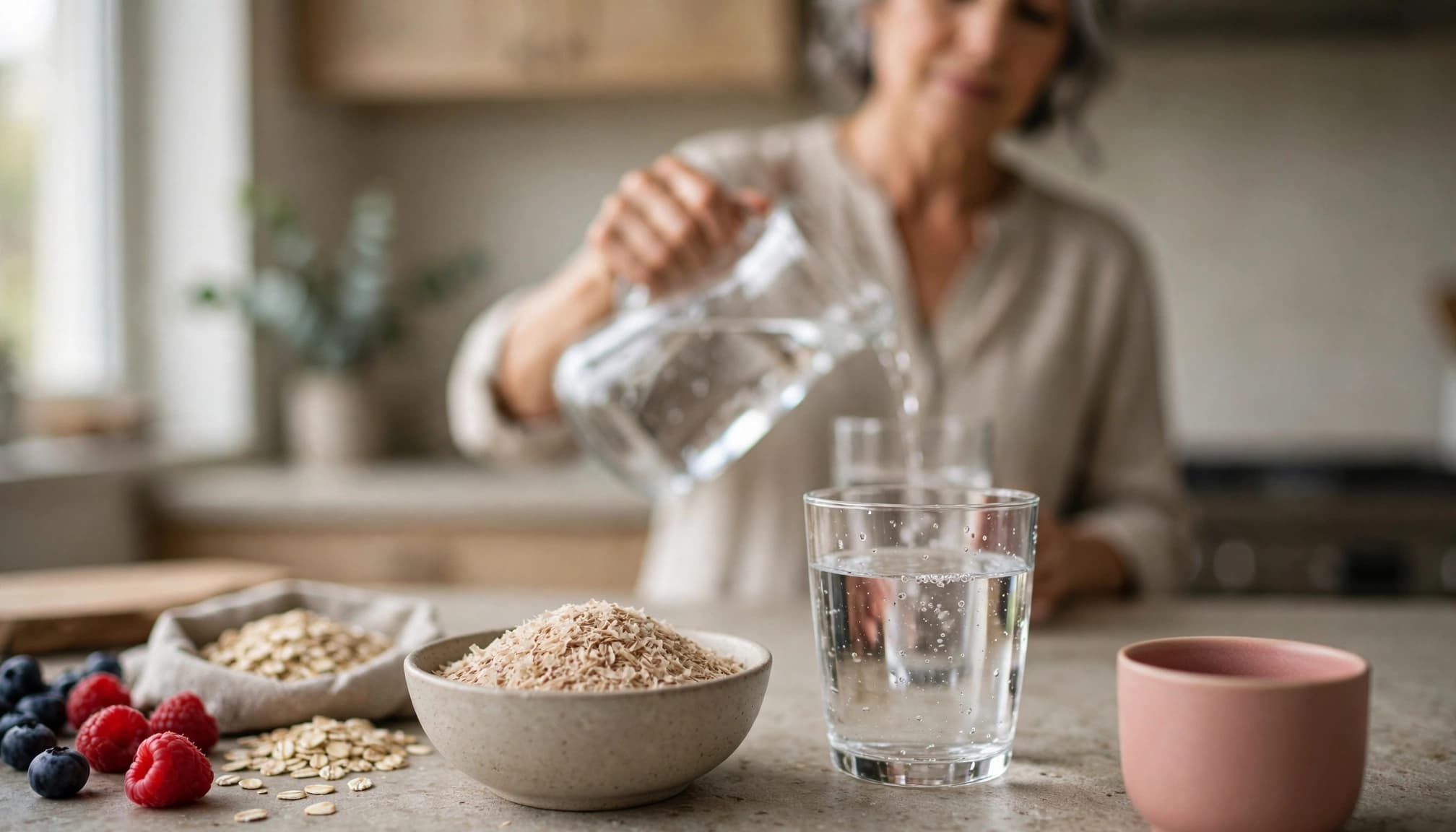
Water matters here. Fiber absorbs fluid, so adequate fluid intake supports its movement through your system. Needs vary by person, activity, climate, and medical restrictions. Keep a glass or water bottle within reach, especially with meals and snacks. Drink regularly unless a clinician has set a fluid limit.
When a Fiber Supplement Makes Sense
Food comes first because whole foods bring vitamins, minerals, and flavor along with fiber. Fiber supplements aren’t a replacement for nourishing meals. Still, psyllium husk is a food-derived option. It may help fill a shortfall in your daily fiber intake during travel, low appetite, or a hectic season.
Start with the smallest label dose and take it with plenty of water. Check with your pharmacist, registered dietitian, or health care provider if you take medications, have kidney or bowel conditions, experience persistent symptoms, or need individualized fluid advice. Fiber products may affect how some medicines are absorbed, so ask about medication timing.
Frequently Asked Questions
Can dietary fiber help with heart health, cholesterol, and blood sugar?
Yes. Soluble fiber can help lower LDL cholesterol and make rises in blood sugar levels after meals more gradual. It’s a practical part of heart-healthy eating, but it doesn’t replace prescribed medication or clinician guidance.
What if Fiber Makes Constipation Worse?
A sudden increase in your daily fiber intake, large amounts of bran, inadequate water, or an ill-fitting supplement routine can contribute to bloating, cramping, or harder stools. Slow down, review how much water you drink, and seek professional advice if symptoms persist, become severe, or include warning signs.
Should I Eat High Fiber During Every Health Issue?
No, a low-fiber diet may be recommended briefly before a colonoscopy, after some intestinal procedures, or during certain digestive flares. Follow your medical team’s instructions instead of independently increasing fiber during an active gastrointestinal problem.
Final Thoughts
Fiber for women over 50 doesn’t have to feel like another item on your to-do list. A bowl of oats, a spoonful of beans, fruit with the skin on, and more water can help you reach 21 grams gradually.
I want you to remember this: small, kind changes are often the ones that last.
Choose one fiber-rich change to try over the next few days. Ask a health care professional about persistent constipation, medication interactions, or condition-specific dietary needs.