
Living Your Best Life After 50: How I Healed from Trauma and Started Flourishing
If you have ever felt like you are carrying a heavy, invisible weight, you are not alone. Many of us reach 50 only to realize we have been holding onto decades of unprocessed grief and stress. My own journey is proof that living your best life after 50 is entirely possible, even after past challenges.
I recently joined Karen Robinson on the Heal Thrive Dream podcast to talk about why your 50s can be your most vibrant season yet. Finding joy after trauma isn’t just a dream. It’s a practical path you can start walking today, with mental health at the heart of healthy aging.
Key Takeaways for Your Healing Journey
- Unprocessed trauma from childhood often resurfaces during midlife transitions.
- That heavy, weighted blanket feeling is frequently a symptom of deep emotional exhaustion.
- Physical health struggles, such as breast cancer, can be tied to long-term emotional burdens.
- The Flourish Journey framework offers six concrete steps to reclaim your energy.
- A simple three-minute daily practice can fundamentally foster a positive mindset.
A Little About Me and Why This Work Matters
On the podcast, I shared a little about who I am and what drives my work. I am an author, motivational speaker, and personal transformation expert focused on women’s empowerment and Flourishing Over Fifty®. For me, midlife is not about fading away. It is about stepping into a brand-new narrative where you can pursue your passion, honor your past, and embrace what is still ahead.
Karen also mentioned her upcoming Finding Energy After Toxic Trauma Summit on October 23rd and 24th, and I am thrilled to be one of the speakers. It is such a natural fit because the summit speaks directly to what so many women are carrying.
How do we re-engage with life after years of grief and stress? It tackles that head-on with real, actionable strategies to manage stress, move past toxic trauma, and reclaim your spark.
The Weight of Unprocessed Childhood Trauma
Many of the struggles I faced in my fifties actually began when I was just 10 years old. That is when my father died suddenly. Like many families back then, we simply did not talk about it. We did not process the grief. We just kept moving.
I learned to stuff those feelings down deep inside, a habit that stayed with me for decades. Without the tools for healthy habits and emotional regulation, I relied on suppression instead. That is a common story for women who were taught to be the strong one from a very young age.
When I lost my mother in my fifties, that old vault of trauma finally cracked open. Her passing was the trigger. But it brought up every loss and tragedy I had ever pushed aside.
Actually, research also backs this up. Unaddressed emotional distress can eventually show up as chronic disease. That is why it matters so much for your long-term physical and mental longevity.
At the time, I was also navigating an empty nest and mounting health concerns. It felt like everything I had avoided was finally demanding to be heard.
Get Your Free Self Care Guide
30 DAYS OF SELF CARE IDEAS AND TRACKER
Sign up to become an insider so you stay up to date on all the happenings…and get a FREE Self Care Guide that has 30 days of ideas and a daily tracker so you can stay on track with your self care.
Recognizing the Symptoms of Emotional Heaviness
How do you know if you are carrying this invisible weight? For me, it was not always a sharp, dramatic depression. Instead, it was a persistent sluggishness and a lack of engagement with the world.
You might recognize some of these common symptoms in your own life:
- A constant weighted blanket feeling or a lingering gray cloud.
- Chronic low energy, including physical fatigue and a noticeable lack of motivation for physical activity.
- Feeling like you are on autopilot, taking care of everyone else while neglecting your own needs.
- Sluggishness that makes even simple tasks feel like a monumental effort.
- Physiological changes, such as unexplained increases in blood pressure, which can often be linked to long-term emotional strain.
- Occasional lapses in mental clarity that might make you worry about cognitive decline, even when it is actually the result of persistent emotional exhaustion.
It is so important to remember that it is not you, it is the weight you have been carrying. We often blame ourselves for feeling down, but usually, we are just reacting to healing from the cumulative weight of midlife.
Facing Physical Health Struggles and the Breaking Point
During this time, I was diagnosed with breast cancer. I only caught it because I stayed on top of my preventive screening. And it happened right as my mother was falling ill. Everything was hitting at once.

Beyond the cancer, I worried about what chronic stress was doing to my body long term. We know that unprocessed emotional turmoil can eventually show up as cardiovascular disease. I was also navigating complications with diabetes. My body felt like it was failing on every front.
I truly believe carrying that weighted blanket of unprocessed trauma for so long took a real toll on my physical well-being. The body often expresses what the mind is forbidden to say.
My turning point came when I found myself flat on my kitchen floor, tears streaming down my face. I did not think I could get back up.
But in that moment of absolute darkness, I heard a voice in my heart that felt like my mother. She told me that while life is hard, I had to get up for my children. That tiny glimmer of hope was the spark that started my real healing journey.
The Six Steps of the Flourish Journey Framework
Once I got off that floor, I knew I needed professional help and a community of women who understood my pain. I started therapy and began connecting with others who felt just as lost as I did.
Over time, I developed a formalized framework called The Flourish Journey to help others move from despair to a state of true flourishing.

Here’s the path that helped me:
1. Reflect on Your Past
You cannot move forward until you sit with the tragedies you have ignored. I had to go back to my father’s death and really spend time processing that loss. It is about acknowledging the childhood grief that your family might have skipped over.
2. Current Life Assessment
Take a hard look at what serves you today and what does not. Midlife women often lose touch with their own joy because they are so busy serving others.
I recommend making a simple list with two columns:
- Activities that bring you genuine joy
- Obligations that drain your energy and need to be reduced
That clarity alone can help you start reclaiming your sense of purpose.
3. Create Your Dreamscape
After cancer, I became acutely aware of how much time I had left. I wanted to make the most of it. A dreamscape is about big, bold dreaming for your retirement years once you have cleared the emotional clutter.
4. Imagine Possibilities
This is the stage where you let yourself believe that things could be different. It is a mental shift from seeing obstacles to seeing opportunities for change.
5. Build Your Soul Sparks Toolkit
Your toolkit should be a curated collection of things that give you life. It is about rediscovering forgotten passions and prioritizing your well being.
Consider including:
- A music playlist that lifts your spirits
- Yoga sessions to reconnect with your body
- Meaningful social connection to foster a sense of belonging
- Hobbies you have not touched in decades
6. Take Small Actions
You do not have to change your entire life in twenty-four hours. Just take one small action that lights you up, and do it over and over again. Momentum is built in the small, daily healthy habits we make to improve our physical and mental vitality.
For more information, you can read through my detailed six types of self-care blog.
What it Truly Means to Flourish
Flourishing does not mean your life is perfect or that you never experience a difficult day. To me, it represents a state of peak performance aging where you feel genuinely good about your life and wake up with joy in your heart.
This purposeful approach to daily living is also the foundation for true longevity, as consistently nurturing your emotional well-being supports your health for years to come.
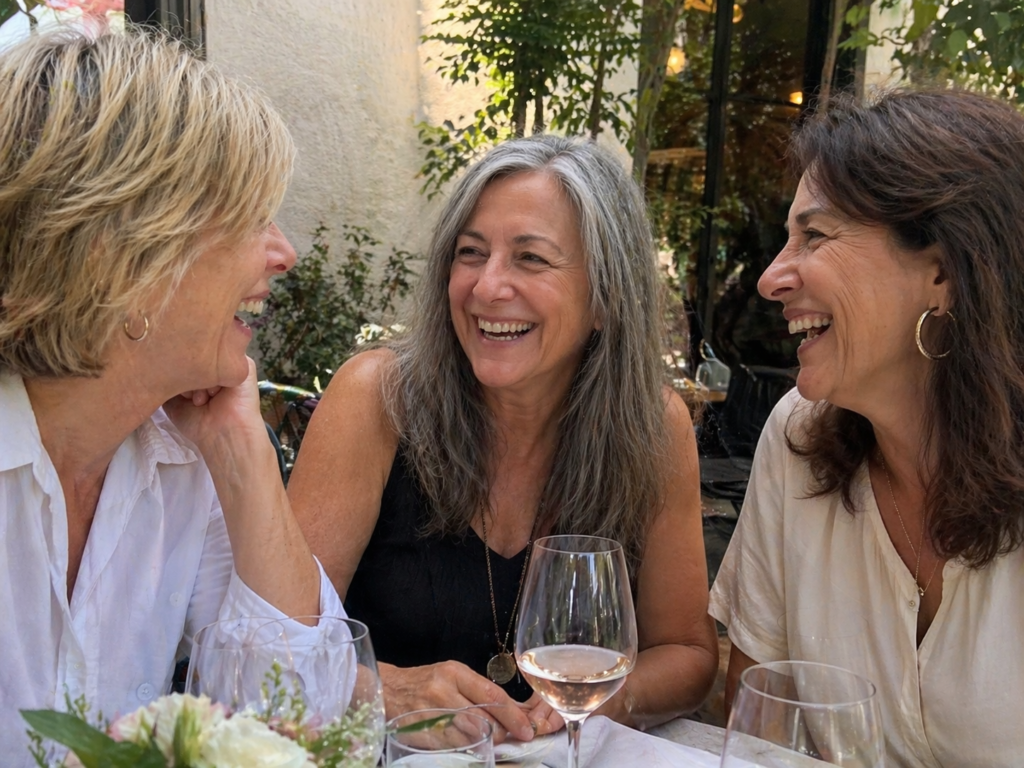
One of the most effective tools I use to cultivate this is The Joy Triangle, a simple three minutes a day practice that leaves no room for excuses:
- One minute of stillness to quiet the mind and manage stress effectively.
- One minute of gratitude to shift your perspective toward the positive.
- One minute of intention to define exactly who you want to be that day.
Choosing a New Direction After 50
After over twenty years in the corporate world, I made a shift. I walked away from that chapter and moved toward motivational speaking and coaching. My mission now is helping women see that rebuilding your life after 50 is not only possible but within reach.
I am currently working on a book coming out next year and developing self-paced programs covering emotional growth, financial fitness, and personal transformation through Zoom cohort courses.
These truly can be your best years. But it does require proactive action. You have to decide that you are worth the effort it takes to build a vibrant future.
FAQs About Midlife Healing
Can trauma from decades ago really affect me now?
Yes, repressed emotions often surface during major life transitions like menopause or losing a parent, manifesting in ways that impact your daily sense of well-being.
Is it too late to start a new career or hobby at 50?
It is never too late. Midlife is often the perfect time for reinvention because you have more wisdom and perspective than ever before.
How is physical health connected to midlife transformation?
As we age, we often face conditions like sarcopenia, which is the age-related loss of muscle mass. To combat this, prioritizing strength training is essential for maintaining independence and metabolic health.
Furthermore, focusing on bone density and adequate protein intake ensures your body remains resilient as you pursue your new goals.
How can I find a community of like-minded women?
Social media groups, local meetups, and summits like the Finding Energy event are excellent places to start connecting with others who are on a similar path.
Your Most Vibrant Years Are Still Ahead
Midlife is a beginning, not an ending. By setting down the emotional baggage and taking proactive steps to build healthy habits like flexibility training, you can move from a place of quiet despair to a life that truly flourishes.
As you focus on your vision and hearing health, maintaining a Mediterranean diet, and nurturing your mind, I hope you will join me in this journey of rediscovery. You can explore all my resources and programs at jenrigley.com. You deserve to feel that spark once again.