Pelvic Floor Exercises for Women Over 50 at Home
A surprise leak when you laugh, cough, or hurry to the bathroom can make you feel like your body has betrayed you. It hasn’t. Changes after menopause, past pregnancies, aging, surgery, and everyday pressure can all affect this small but hard-working area.
Pelvic floor exercises are a gentle way to build more support for your bladder and bowel, right at home. You don’t need fancy equipment or an exhausting workout. You need the right pelvic floor muscles, a little patience, and a routine you can keep.
Key Takeaways Before You Begin
Pelvic floor training isn’t about clenching all day or pushing yourself through discomfort. It is about learning to contract and fully release your pelvic floor muscles.
- Start sitting or lying down, where your body can relax.
- Exhale as you gently lift while breathing normally, then let it go fully.
- Begin with short squeezes and build slowly instead of jumping to 10-second efforts.
- Aim for regular practice for about three months before judging your progress.
- Stop and get professional support if you feel pain, pressure, or can’t tell which muscles are working.
Small practice sessions can make a real difference. You do not have to do everything perfectly to get started.
How Pelvic Floor Training Helps After 50
Your pelvic floor muscles are the muscles and connective tissues at the bottom of your pelvis. Think of them like a supportive hammock under your bladder, uterus, and bowel.
What These Muscles Do Every Day
These muscles help you control urine and bowel movements. They also support your pelvic organs, contribute to sexual function, and help brace your body when you stand, lift groceries, sneeze, or walk up the stairs.
Stress incontinence is a form of urinary incontinence that can cause leaking during a cough, laugh, or workout. You may also feel urgency, a sense of heaviness, or less confidence leaving the house for long stretches.
The Mayo Clinic’s overview of Kegel exercises explains that these muscles support the bladder, uterus, small intestine, and rectum. They’re doing plenty of work, even when you never think about them.
Why Midlife Can Change Things
Menopause can bring lower estrogen levels and changes in tissue strength. Pregnancy and childbirth, constipation, chronic coughing, carrying extra weight, and pelvic surgery can also add strain over time.
None of this means you’ve done something wrong. It means your body may need a little support now, the same way your hips, knees, sleep, and energy sometimes do after 50.
Finding the Right Muscles First
Before you begin a routine, take a moment to find your pelvic floor muscles. Working the wrong muscles is common, especially when you are new to this.

Use a Simple Internal Cue
Sit comfortably with your feet on the floor. Relax your abdominal muscles, thighs, and bottom. Then imagine you are trying to stop yourself from passing gas while also gently stopping the flow of urine.
The feeling is a small lift and squeeze inside your pelvis. Some women feel the lift near the vaginal muscles. The movement should be gentle and upward, not a forceful squeeze.
The NIDDK guide to Kegel exercises recommends using that “hold it in” feeling to identify the muscles. Do not make a habit of stopping urine midstream as your exercise, though. Use the cue, then practice away from the toilet.
Keep the Rest of Your Body Soft
Your shoulders do not need to rise. Keep breathing normally. Your buttocks and thighs do not need to squeeze like you are holding a coin between them.
If you feel tension in your jaw, belly, or legs, pause and reset. I like to take one slow breath in, then exhale as I make a gentle lift.
Full relaxation is not the break between repetitions. It is half of the exercise.
A Beginner Pelvic Floor Exercise Routine
Start with a manageable routine. This beginner set of Kegel exercises teaches control without rushing. If you overdo it, your pelvic floor muscles can become tired or tense, which isn’t the goal.
Begin With Slow Squeezes
Empty your bladder, then sit in a chair or lie down with your knees bent. Try this simple starting routine of short squeezes:
- Breathe in and let your belly soften.
- As you breathe out, gently lift and squeeze.
- Hold for three seconds, then fully relax for three seconds.
- Repeat eight times, resting longer if you notice muscle fatigue.
Once this feels easy, work toward five- or six-second long squeezes. Some women eventually build up to 10-second holds, but there is no prize for rushing there. Remember that long squeezes still require full relaxation between repetitions.
MedlinePlus suggests sets of 10 muscle contractions, repeated three to five times daily, with equal time to relax between each squeeze. Their pelvic floor muscle training instructions are a helpful reminder that rest matters as much as the contraction.
Add a Few Quick Lifts
After your slow squeezes, try five short squeezes. Gently lift, release, lift, release. These can help you practice responding when a sneeze or sudden cough catches you off guard.
Once this basic routine feels comfortable, the supported bridge pose in the next section offers an optional complement.
I would rather see you do a few steady repetitions every day than push through a long session once a week. Consistency is where the quiet progress happens.
Gentle Movements That Support the Pelvic Floor
Kegels are the most direct exercise, but your pelvic floor muscles do not work alone. Your breath, deep abdominal muscles, hips, and posture all play a part.
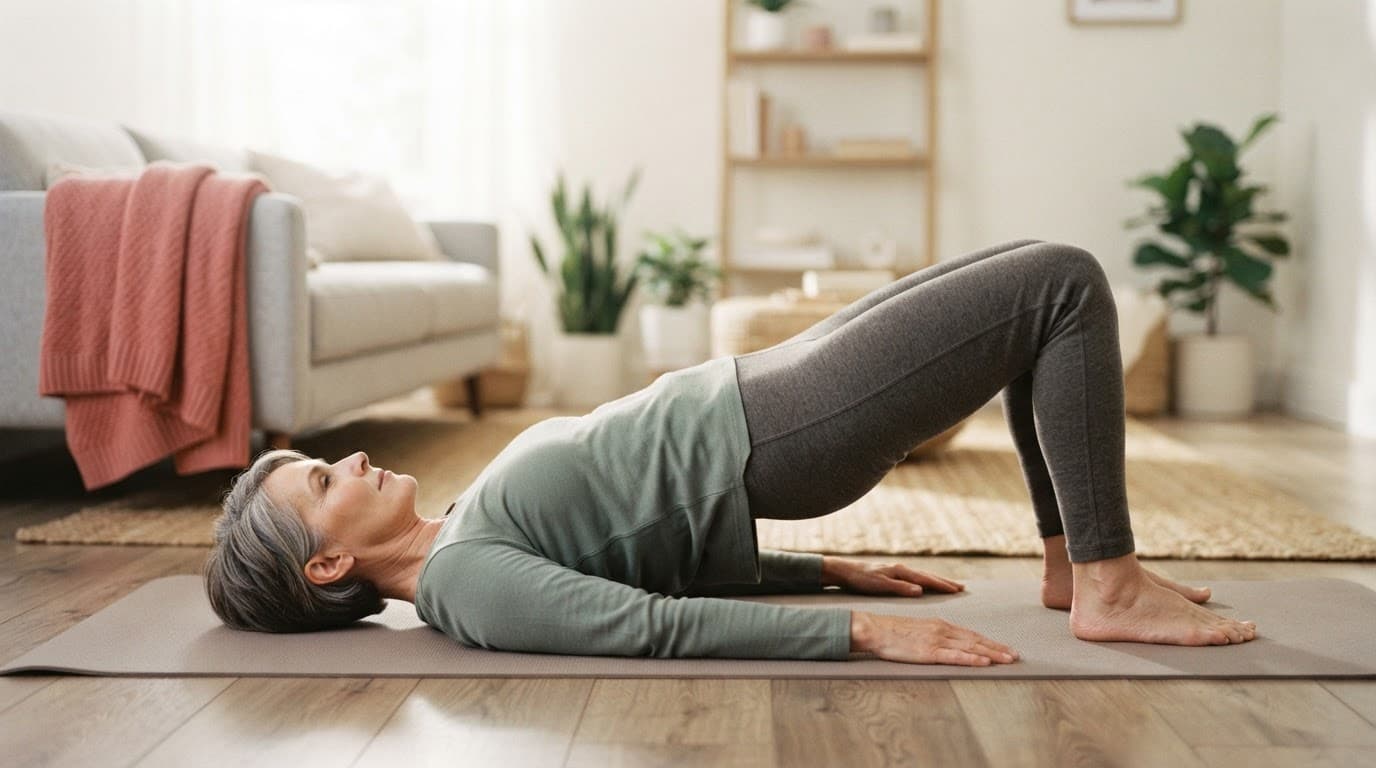
Try a Supported Bridge Pose
Lie on your back with knees bent and feet flat on the floor. Breathe out, gently lift your pelvic floor, then raise your hips only as far as feels comfortable. In the bridge pose, coordinate the lift with your exhale instead of testing your core strength.
Lower slowly and release everything. Try five repetitions at first. If you feel pressure in your pelvis, back pain, or breath-holding, skip the bridge pose and return to seated practice.
Use Your Breath as a Reminder
A long exhale helps many women avoid bearing down. Think “breathe out, gently lift,” then “breathe in, fully release.”
I have found that slow breathing belongs in so many corners of midlife care. It can help when my body feels wound up, and it makes these exercises feel less like another chore on the list.
Mistakes That Can Make Pelvic Floor Symptoms Worse
The biggest mistake is assuming harder is always better when working your pelvic floor muscles. These small muscles respond best to calm, accurate practice rather than over-exercising, which can cause muscle fatigue.
Avoid Clenching and Holding Your Breath
Do not grip your stomach, squeeze your bottom, or press your knees together. These movements can make it harder to feel the pelvic floor itself.
Also, do not keep the muscles tightened throughout the day. A healthy pelvic floor needs to contract and relax. If you are always bracing, your body never gets the message that it is safe to let go.
Know When to Ask for Help
These exercises should not hurt, and pelvic pain or pain during sex warrants a conversation with a healthcare professional. Seek evaluation for a vaginal bulge or heavy feeling, which may signal pelvic organ prolapse. Also report trouble emptying your bladder, fecal incontinence, or blood in your urine.
A pelvic floor physical therapist can check whether you are contracting the right muscles and create a plan for your body. Some women may also benefit from options such as biofeedback or electrical stimulation, but those are best chosen with professional guidance.
The NHS Inform pelvic floor guidance also emphasizes squeezing gently while keeping the rest of the body relaxed. If that still feels confusing, you deserve support, not frustration.
Building a Routine You Can Keep
The best time to practice is the time you will remember. I would not save this for a perfect quiet moment that may never arrive. The pelvic floor muscles respond better to regular, manageable practice than occasional intense sessions.

Attach Practice to Ordinary Moments
Try one short set after brushing your teeth, one while waiting for the kettle to boil, and one before bed. Put a simple reminder on your phone if that helps.
These few minutes fit beautifully into a practical wellness routine for women over 50. They can complement your regular fitness routine, not replace it. Caring for your pelvic health is not vain or selfish. It is part of moving through your day with more comfort and confidence.
Give yourself a full three months of regular practice before deciding it is not helping, since progress is often gradual. You may notice more confidence and better bladder control during a long walk, a movie, or an outing.
Frequently Asked Questions
Can These Exercises Help With Bladder Leaks?
They can help many women with stress incontinence, especially leaks triggered by coughing, laughing, lifting, or exercise. Still, bladder leakage has more than one cause, so new, worsening, or frequent symptoms deserve a conversation with your clinician.
How Long Does It Take to Notice Results?
Some women notice better awareness within a few weeks. Stronger bladder control often takes longer. A three-month period of steady practice is a more realistic checkpoint than expecting changes after a few days.
Are Kegel Exercises the Only Option?
No. A pelvic floor physical therapist may use hands-on assessment, breathing work, bladder training, biofeedback, or other tools. If your pelvic floor is overly tight, more squeezing may not be the answer.
Can Men Benefit From These Exercises Too?
Yes. Men have pelvic floor muscles too, and they may use this training for bladder or bowel control, including after prostate treatment. The same rule applies: correct technique matters more than doing a lot.
A Stronger, More Comfortable Next Chapter
Pelvic floor exercises are small, but their impact can be meaningful. A few gentle squeezes, paired with full relaxation and steady practice, can help you feel more at home in your body.
You do not need to live around bathroom maps, crossed legs, or the fear of a laugh at the wrong moment. Start gently, stay patient, and ask for help when your body asks for more support.