Best Balance Exercises for Women Over 50 at Home
No one wants to grab the kitchen counter because a quick turn felt a little wobbly. But if that’s happened to you, please don’t brush it off or let it scare you. Balance can change after 50, and it can also be practiced.
The best balance exercises women over 50 can do at home are simple, practical, and designed for real life. You don’t need fancy equipment, a gym membership, or an hour of free time to feel more sure on your feet.
A few minutes of physical activity can fit into your daily routine and support better stability and balance during walks, errands, and busy days.
Key Takeaways
- Balance training works best when you practice it often, even in short sessions.
- A sturdy chair, kitchen counter, or wall is smart support when you’re starting.
- Still positions build static balance, while controlled walking and marching drills train dynamic balance.
- Strong hips, legs, and core muscles give your body more control when you trip, turn, or reach.
- Start small and stay consistent. A routine you enjoy is the one you’ll keep.
Why Balance Changes After 50
Balance isn’t one skill. It’s a team effort between your eyes, inner ears, feet, joints, muscles, and brain. Together, these systems support coordination and balance. Your body is constantly collecting information about where you are, then making tiny adjustments to keep you upright.
After 50, those adjustments can take more effort. Older adults may lose muscle mass when strength training and regular physical activity decline. Stiff ankles or limited hip mobility can slow how quickly you correct a misstep. Midlife may also come with disrupted sleep, joint discomfort, medication changes, or less daily movement. It adds up.
For women, bone health matters here, too. Avoiding a fall isn’t about being fearful. It’s about protecting your independence and giving yourself the freedom to keep saying yes to the life you want.
Static balance is staying steady in one place, such as standing on one leg. Dynamic balance is staying controlled while you move, turn, step over something, or walk on an uneven path. You need both.
The 10-Second Check Is a Clue, Not a Grade
Standing on one leg is a useful little check-in. A 2022 single-leg stance study followed 1,702 adults ages 51 to 75. People who couldn’t hold a one-leg stance for 10 seconds had a higher adjusted risk of death during the study’s follow-up period.
That finding is an association, not a prediction about your future. I don’t see this test as a pass-or-fail grade. I see it as information. If 10 seconds feels impossible today, it may be a sign to build strength and balance, then bring the concern to a physical therapist if this is new or getting worse.
Best Balance Exercises Women Over 50 Can Do at Home
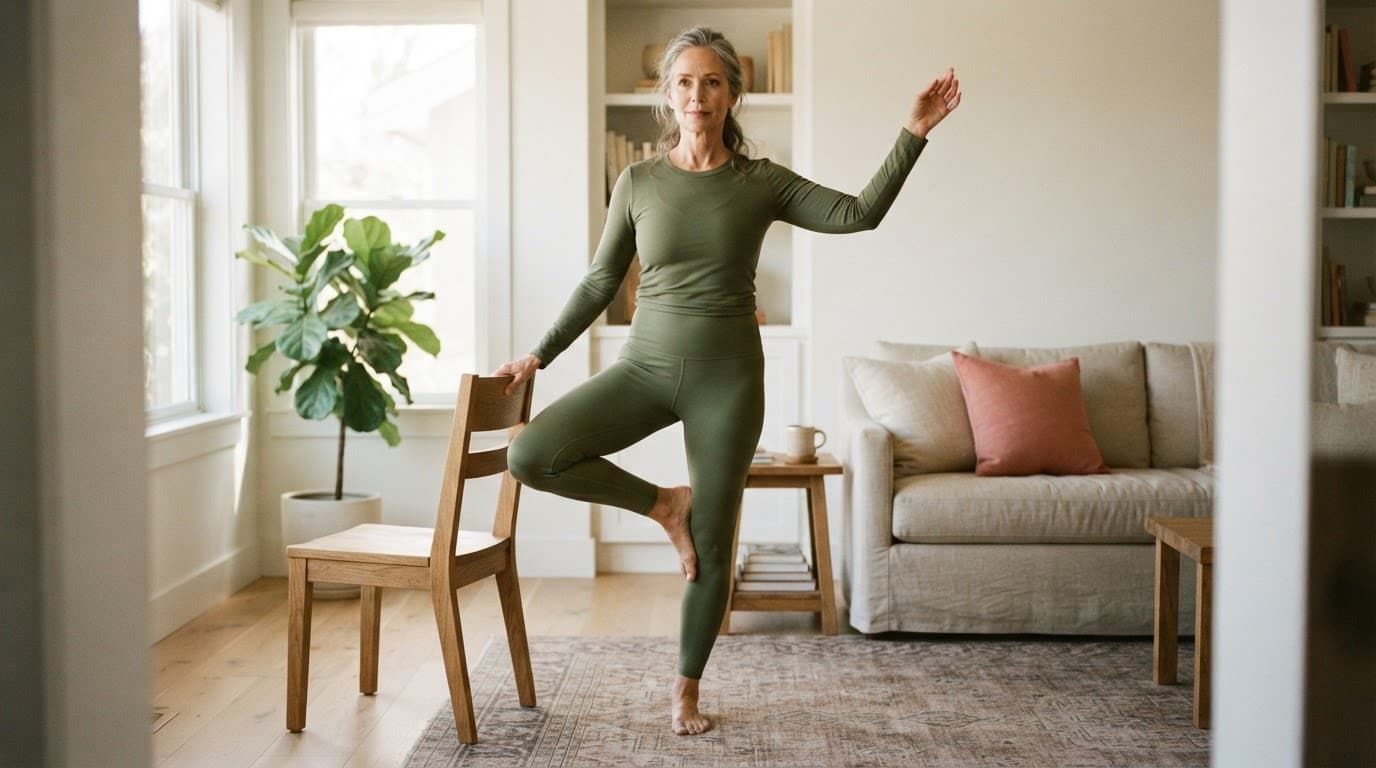
These balance exercises are small on purpose. Begin these at-home drills on a stable surface near a sturdy chair or countertop. Keep one or both hands close enough to touch support if you need it.
Begin With Steady, Still Positions
Start with your shoes on if bare feet don’t feel secure. Stand tall, soften your knees, and breathe normally. You don’t need to lock your body into place.
- Feet-together stand: Stand with your feet side by side and lightly hold the counter. Let go for a few seconds when you feel ready. Work toward holding the position for 20 to 30 seconds.
- Tandem stand: Place one foot directly in front of the other, heel close to the toes of the back foot. This narrower stance wakes up your ankles, hips, and core. Switch which foot is in front.
- Single-leg balance (standing on one leg): Hold the back of a chair with both hands, then lift one foot a few inches off the floor. Start with five seconds. Repeat two or three times per side, and slowly use less hand support as you improve.
Don’t rush to balance with your eyes closed. Taking away visual information makes this much harder. It may be a later challenge with a physical therapist nearby. Eyes-closed work is optional and isn’t appropriate for everyone.
A chair or counter isn’t “cheating.” It gives your nervous system room to practice without panic.
Add Movement Once Your Base Feels Solid
Daily life happens in motion. These at-home drills build stability and balance during movement. They rehearse stepping around a pet, turning to answer the door, carrying laundry, and walking on grass or pavement.
- Heel-to-toe walk: Place the heel of one foot directly in front of the toes of the other. Take eight to 10 slow steps beside a wall or counter, then turn around and come back.
- Standing march: Hold a counter with one hand and slowly lift one knee, then the other. Keep a neutral spine instead of tipping side to side. Try 10 marches per leg.
- Side steps: Step to the right, bring your left foot in, then repeat for six to 10 steps. Travel side to side, then return the other way. Keep your toes facing forward and take controlled steps.
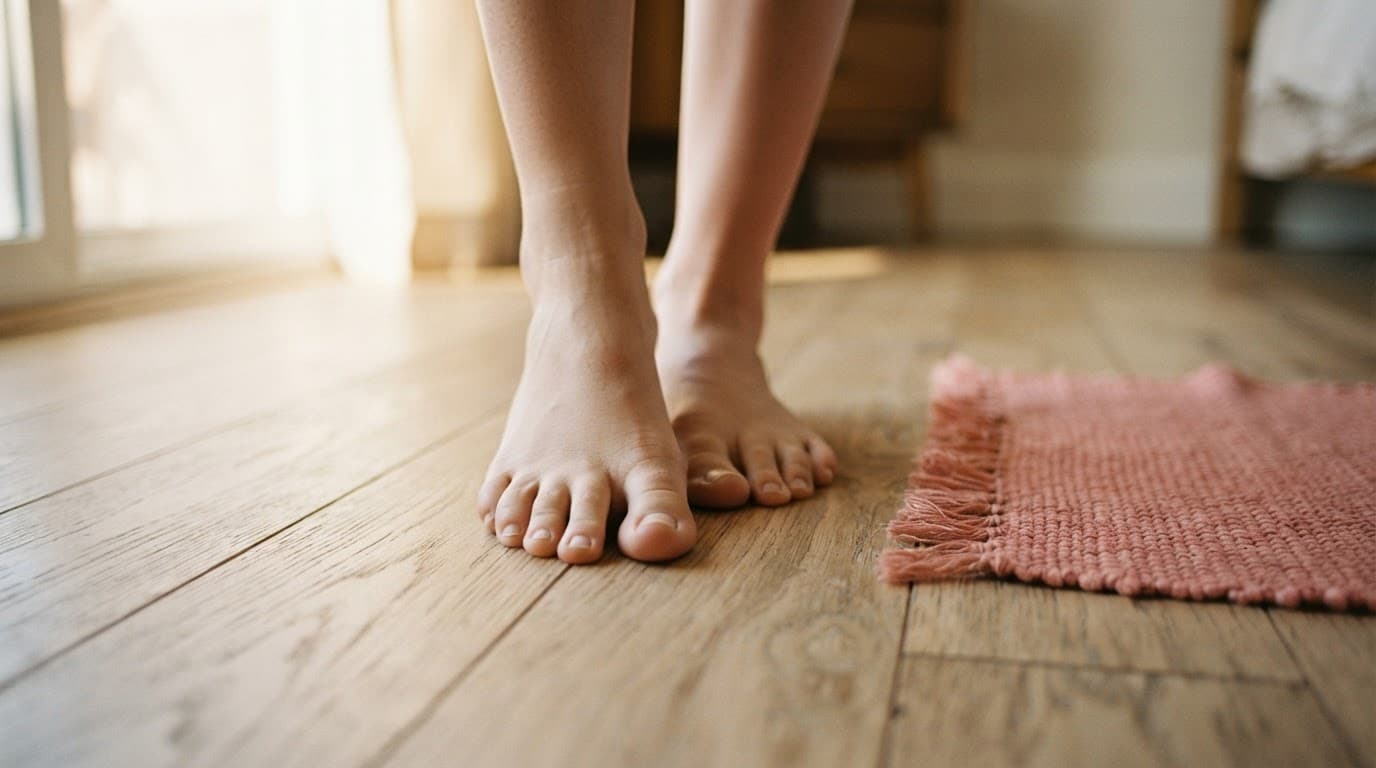
A research review of balance and strength programs supports combining leg-strength work with balance practice for fall prevention. That’s encouraging, because your simple home routine can pull double duty.
If you like guidance while you move, this 10-minute balance video from Hospital for Special Surgery is a friendly option for a day when you don’t want to plan your own session.
Strong Hips and Core Make Everyday Movement Safer
Balance work for women over 50 isn’t limited to standing still. Your hips and core help hold you steady, while hip mobility helps you step off a curb, reach into a cabinet, or catch yourself after a stumble.
I like adding a few simple strength training moves to this routine two or three times each week to help maintain muscle mass. Try eight to 12 slow sit-to-stands from a sturdy chair. Keep your feet planted, stand without swinging forward, then lower yourself with control.
A clamshell is another favorite. Lie on your side with knees bent, keep your feet together, and lift your top knee without rolling your pelvis backward. A bird dog is helpful, too, if getting on the floor feels comfortable. From hands and knees, keep a neutral spine as you reach one arm and the opposite leg long, then return slowly.
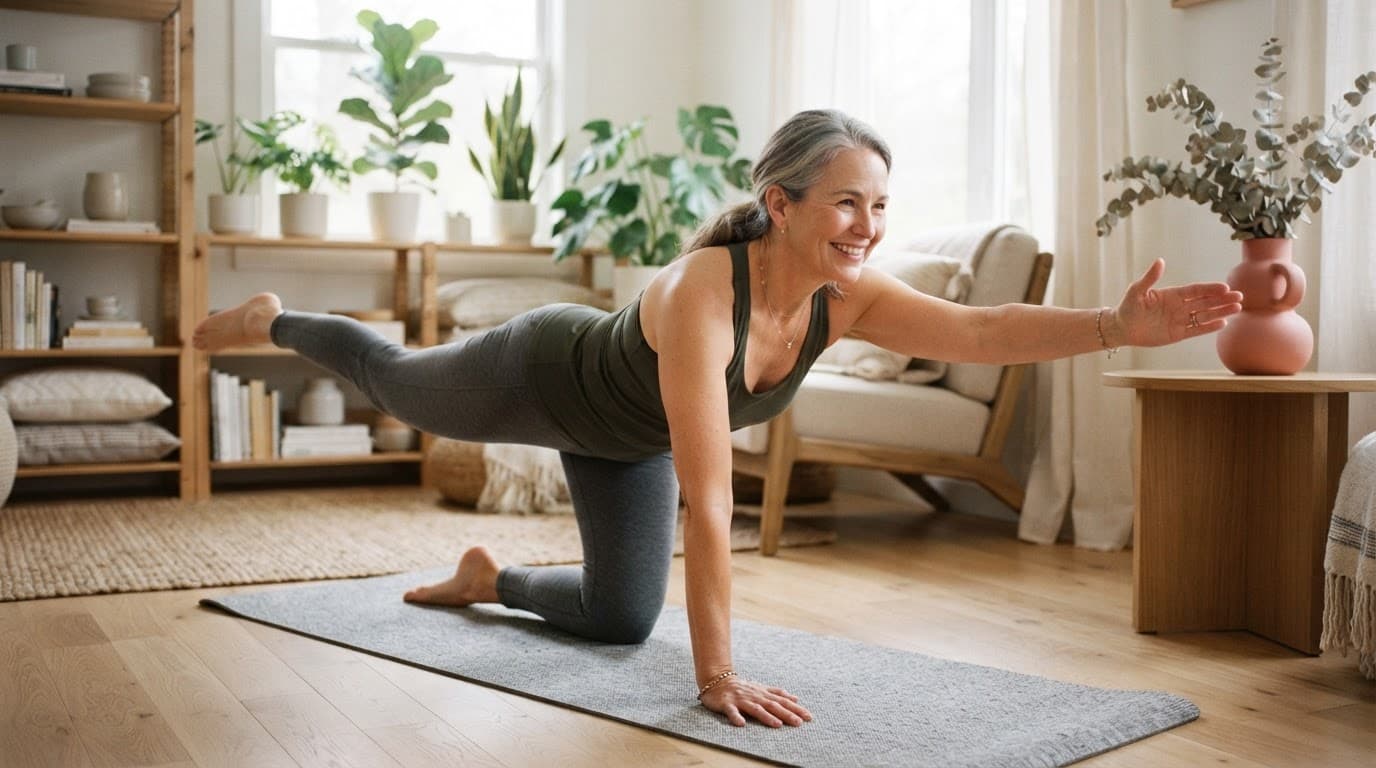
Your core is more than your abs. It includes the muscles around your trunk, back, and pelvis, creating core strength that helps you stay upright. Together, these moves form a short exercise program that supports stability and balance, making every balance drill feel less shaky.
Set Up a Safe Routine You Can Keep
Clear the floor first. Move loose rugs, cords, pet toys, and anything else that could catch your foot. Practice on a stable surface in good light, and keep support nearby. Keep your phone nearby if you live alone.
The Johns Hopkins fall prevention exercise guidance also recommends working near stable support while you build confidence. Skip a movement that causes sharp pain, dizziness, chest pain, or a feeling that you’re about to fall. Stop and seek individualized guidance if you have a high risk of falling. A physical therapist can adapt an exercise program to your needs.
I recommend two or three focused sessions each week, about 10 minutes each. If that feels like too much, pair a brief practice period with physical activity you already do. Fit it into your daily routine, such as while the coffee brews or before lunch.
A small routine fits into the same kind of care you give your sleep, stress level, and meals. If you’re also working on gentle movement, building a walking habit after 50 can help you create a rhythm that feels good instead of demanding.
Your Steadier Next Step
Feeling steady doesn’t come from forcing yourself through a hard workout. It comes from giving your body frequent, safe chances to learn.
Choose one exercise today. Hold the counter, take your time, and let those few minutes become a promise you keep to yourself. Confidence grows through practice.
Frequently Asked Questions
How Often Should Women Over 50 Do Balance Work?
Aim for two or three dedicated sessions a week, then add tiny bits of practice during your normal day. Consistency matters more than a long, exhausting workout. For older adults, even five minutes of steady practice is worth doing.
What’s the Difference Between Static and Dynamic Balance?
Static balance means staying stable without moving your feet, like a tandem stand or a one-leg hold. Dynamic balance is controlling your body while moving, such as marching, side stepping, or walking heel to toe.
Can Hip and Core Strength Help Prevent Falls?
Yes. Your hips and core help you correct your posture when you lose your footing. Pairing balance drills with simple strength work gives your body more support when everyday movement gets unpredictable.