Calcium-Rich Foods for Women Over 50
Bone loss doesn’t usually make a loud entrance. It can happen slowly, year after year, while you’re busy living your life, caring for people, working, traveling, and trying to remember why you walked into the kitchen.
That’s why calcium-rich foods matter so much after 50. Many women benefit from aiming for about 1,200 milligrams of calcium each day, but that isn’t a rigid rule. You don’t need to spend your life measuring cheese cubes or forcing down foods you don’t enjoy. Your everyday meals can contribute plenty.
Key Takeaways
- Women age 51 and older generally need 1,200 mg of calcium daily, with food as the first place to look.
- Yogurt, milk, cheese, calcium-set tofu, fortified soy milk, collard greens, and fish with edible bones are dependable choices.
- Spinach is healthy, but its calcium isn’t absorbed as well as calcium from kale, bok choy, or collard greens.
- Vitamin D helps your body take in calcium, so both nutrients belong in your bone-health routine.
- Small choices repeated often matter more than one “perfect” calcium-heavy meal.
Why Calcium Needs Change After 50
After menopause, lower estrogen levels can accelerate bone loss for postmenopausal women. Your body still needs calcium for muscle function, nerves, heart, and blood vessels. When your diet comes up short, it can pull calcium from your bones to keep those systems running.
Over time, that can raise the risk of osteopenia, osteoporosis, and fractures. It sounds serious because it is, but I don’t believe bone care needs to become another fear-filled item on your to-do list. A steady food routine offers a kind, practical foundation for bone health.
The Bone Health and Osteoporosis Foundation’s calcium and vitamin D guidance identifies 1,200 mg of calcium as the recommended dietary allowance for women over 50. You don’t need to reach it perfectly each day. Consistent calcium intake over your usual week matters more than daily perfection.

Best High-Calcium Foods for Women Over 50
The best choices are the ones you’ll eat regularly, enjoy, and can keep in your kitchen without turning grocery shopping into a major project. Dairy products are concentrated sources, but they are far from the only option.
Here are typical amounts in a familiar serving size. Labels can vary, especially for fortified foods.
| Food | Serving Size | Approximate Calcium |
|---|---|---|
| Low-fat yogurt | 8 ounces | 415 mg |
| Milk | 8 ounces | 299 mg |
| Part-skim ricotta | 4 ounces | 335 mg |
| Mozzarella | 1.5 ounces | 333 mg |
| Sardines with bones | 3 ounces | 324 mg |
| Fortified soy milk | 1 cup | About 300 mg |
| Collard greens, cooked | 1 cup | 266 mg |
| Canned pink salmon with bones | 3 ounces | 181 mg |
| Chia seeds | 1 ounce | 179 mg |
| Calcium-set tofu | 1/2 cup | 200 mg or more |
Check the label for its serving size and daily value, since brands and fortified products can vary.
Yogurt is one of my favorite easy options because it works at breakfast, as an afternoon snack, or stirred into a savory sauce. A bowl with fruit and seeds gives you a satisfying start without much fuss.
If dairy doesn’t agree with you, lactose-free milk and yogurt can be helpful. A calcium-fortified plant milk is also a strong option. Give the carton a little shake before pouring, since calcium can settle at the bottom.
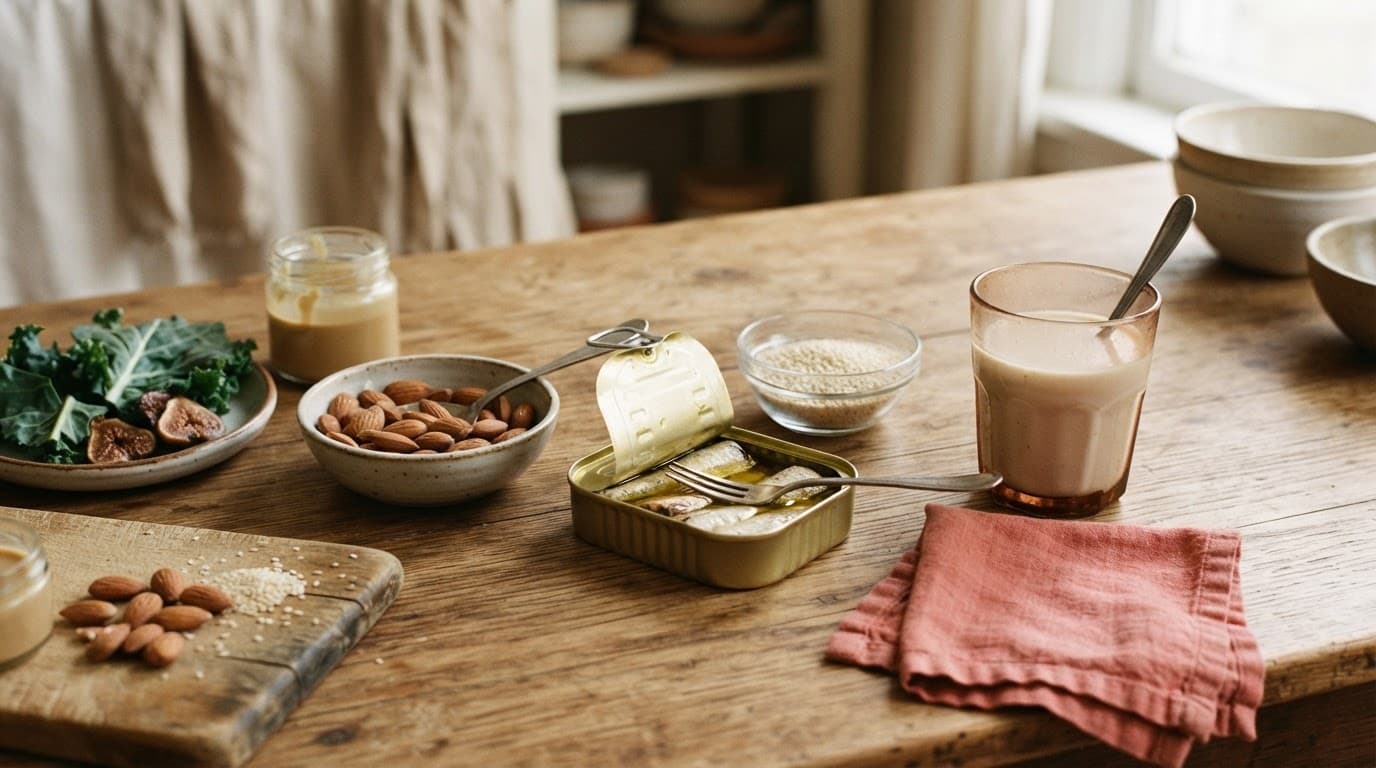
Fish with soft edible bones may not be everyone’s first thought, but canned sardines and salmon are genuinely useful. The tiny bones are where much of the calcium lives, and they soften during canning. Mash sardines with lemon and herbs for toast, or mix canned salmon into a simple salad.
Plant-Based Choices and Better Calcium Absorption
A dairy-free or vegan diet can absolutely include enough calcium. People avoiding dairy products can meet their needs through plant-based sources. It does take a little more attention because calcium amounts vary so much among plant foods.
Calcium-set tofu, fortified plant milk, collard greens, kale, bok choy, turnip greens, white beans, tahini, almonds, and other seeds all have a place on the plate. Fortified foods, such as fortified orange juice and fortified almond milk, can also help. The NIAMS bone health guide includes leafy greens, calcium-set tofu, and fish among its recommended food sources.
Here’s the part that trips people up. Spinach contains calcium, but it also contains a lot of oxalates. Oxalates bind to calcium in the digestive tract, which can limit calcium absorption. Rhubarb has the same issue.
I still eat spinach because it is nutritious and delicious. I simply don’t count it as my main calcium source. Kale, bok choy, and collard greens are better choices when calcium is the goal because they are lower in oxalates.
Beans, nuts, seeds, and whole grains contain phytates, which may reduce the amount of calcium your body uses. Please don’t take that as a reason to avoid them. These foods bring fiber, protein, and many other nutrients to your day. Variety is more helpful than trying to make one food carry the whole job.
Spinach belongs in a healthy diet, but collards, kale, and bok choy are stronger leafy-green choices when you are counting on calcium.
Vitamin D matters here, too. It helps your intestines absorb calcium. Fatty fish, egg yolks, and fortified milk or plant milks can contribute vitamin D, and your clinician may recommend testing or a supplement based on your health history.
A Day of Calcium That Feels Like Real Food
I like to think of calcium as something you scatter through the day, not something you cram into dinner at 7 p.m. A little at breakfast, a little at lunch, and a little later on feels much easier.

One simple day could begin with eight ounces of yogurt and an ounce of chia seeds, giving you about 594 mg. Lunch might be canned sardines over cooked greens, adding another 590 mg or so. That gets you close to your daily target before dinner even arrives.
For a dairy-free day, two cups of a calcium-fortified plant milk, sardines, and a serving of cooked greens land near 1,200 mg. If you don’t eat fish, use calcium-set tofu and check the package’s serving size and calcium amount, since brands differ. A spoonful of tahini in a dressing, a handful of almonds, or fortified cereal can help close a small gap.
No one meal has to be a nutritional masterpiece. I find that a few repeatable meals take the pressure off, and that is usually what makes healthy habits stick.
When Calcium Supplements Make Sense
Food comes first because it brings more than calcium. You also get protein, potassium, magnesium, and the simple pleasure of a good meal. Still, calcium supplements can be appropriate if you have trouble meeting your needs through food, follow a limited diet, or have been advised to take one after a bone-density test.
Don’t guess at a high dose. These products can interact with some medicines, including certain thyroid medications and antibiotics. They may not be the right choice for everyone with a history of kidney stones, either.
The Mayo Clinic’s supplement guidance is a helpful reminder to count calcium from food and supplements together. Your doctor or pharmacist can help you choose the amount and timing that fit your situation.
A Steadier Way to Support Your Bones
A strong calcium routine doesn’t need to look strict or joyless. It can be yogurt with berries, a warm mug of fortified plant milk, greens tucked into dinner, or salmon salad made from a pantry staple.
The goal is a steady pattern of calcium-rich foods that feels like your life, not a plan you abandon after one busy week. Your bones have carried you through a lot. Feeding them well is one gentle way to care for the years ahead.
Frequently Asked Questions
Can You Get Enough Calcium Without Dairy?
Yes. Fortified soy milk, calcium-set tofu, collard greens, kale, bok choy, tahini, chia seeds, almonds, sardines, and canned salmon can all help. Read fortified-food labels, especially if you’re vegan, since brands vary widely.
Are Canned Sardines and Salmon Worth Eating for Calcium?
They’re excellent options when the bones are included. A 3-ounce serving of sardines with bones provides about 324 mg of calcium. Canned pink salmon with bones provides about 181 mg per 3-ounce serving. Compare the serving size on the can or label when estimating calcium.
Does Spinach Count as a Good Calcium Food?
Spinach contains calcium, but its high oxalate content makes that calcium hard for your body to absorb. Enjoy spinach for its many benefits, then rely on lower-oxalate greens, such as kale, bok choy, and collards, for more usable calcium.
Do You Need Calcium Supplements Every Day?
Not necessarily. If your usual meals meet your needs, supplements may not be needed. If you fall short often or have a diagnosed bone concern, talk with your health care provider before choosing a dose.