Sorting a Parent’s Belongings After Death Without Rushing
You can begin sorting a parent’s belongings after their death by handling urgent paperwork, then allowing time for more personal decisions. I encourage you to give yourself permission to pause, even when others are ready to clear the house.
A little structure can help you care for the belongings and yourself along the way.
Key Takeaways
- Handle urgent paperwork separately from decisions about clothing, photographs, and keepsakes.
- Start with one small area and choose a stopping point before you begin.
- Give uncertain items a temporary place so every decision doesn’t have to happen today.
- Ask family members for particular tasks rather than waiting for general offers of help.
- Choose keepsakes that hold meaning for you and fit the home you’re living in.
- When a home must be cleared quickly, separate moving belongings from deciding their final destination.
Start With What Needs Attention Now
Sorting can feel overwhelming when paperwork, family requests, and personal belongings are mixed together. I’d separate those responsibilities before opening the first closet.
Gather Papers Without Sorting Every Memory
Put the will, death certificates, insurance information, and professional contact details in one secure place. Keep a simple record of calls and expenses, with dates beside anything that needs timely attention.
This is a practical starting point, not a legally required checklist. Keep unfamiliar documents together rather than shredding them while you’re tired or distracted.
The National Institute on Aging’s guidance after someone dies also recognizes the need for emotional support. A capable friend can help with paperwork while leaving personal decisions to you.
Keep Estate Decisions Separate
I’d keep anything that may belong to the estate aside from personal keepsake decisions. Wanting an object and having authority to give it away are separate matters.
If you were also the caregiver, adjusting when caregiving ends deserves attention of its own. Years of being responsible can make it hard to stop managing everything, even when you’re exhausted.
Sort a Parent’s Belongings at a Gentle Pace

A whole house is a great deal to hold in your mind. I’d make the first session small enough that you can leave without feeling completely emptied out.
Choose One Manageable Area
Begin with a single drawer, shelf, or kitchen cupboard that feels less emotionally charged. You can leave the bedside table, favorite coat, or handwritten letters for another day.
Choose a stopping point before you begin, perhaps when that drawer is finished or after a short session. Leave yourself enough energy to put things safely away and get home.
Before beginning, I’d use the Daily Joy Practice (Joy Triangle) as a first small step toward noticing comfort. My free Self-Care Journey Starter offers 30 days of ideas and a daily tracker if a little structure would help.
Give Uncertain Items Somewhere to Wait
The National Institute on Aging’s advice on sorting belongings includes making keep, give-away, and unsure groups. That third group gives you somewhere to put a decision that feels too hard today.
Label the container by room or contents so you can find things again. Keep uncertain items separate from donations, especially when several people are helping.
Choose Keepsakes That Fit Your Life
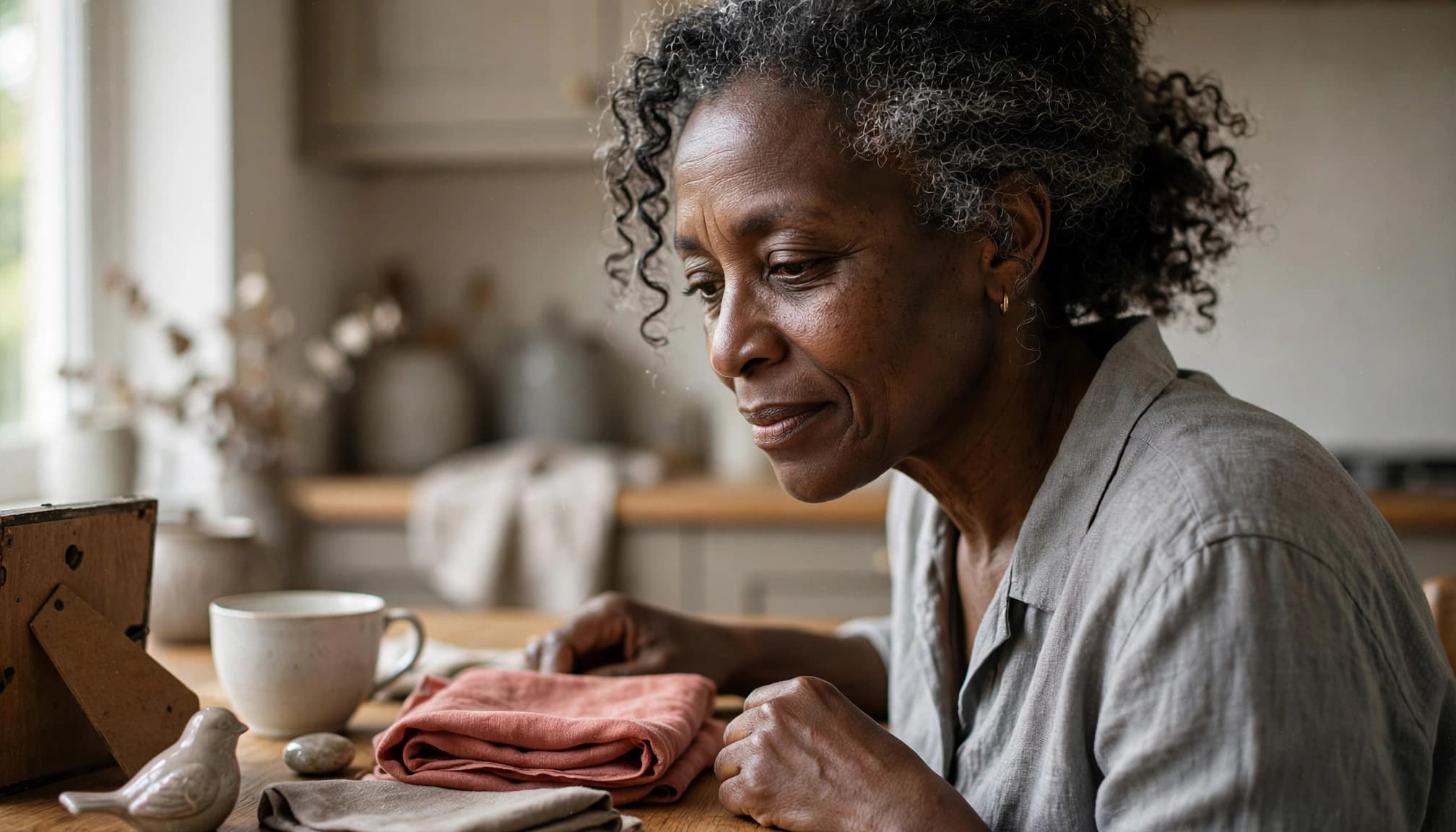
Some belongings hold a whole relationship in one small object. Others mattered enormously to your parent without having the same meaning for you.
Notice What You Want Nearby
I’d ask whether an item brings a memory you want to carry into everyday life. A recipe card you can use may feel more personal than a cabinet full of dishes you have nowhere to put.
You can also photograph an object before letting it go. Add a short note about its story, because a photograph alone won’t tell the next generation why it mattered.
Objects that bring distress deserve consideration, too. You don’t have to display something simply because someone else believes a daughter should treasure it.
Give Treasured Things a Real Place
Before taking furniture or boxes home, decide where they’ll go. Your own rooms deserve to remain comfortable and usable while you grieve.
I wouldn’t set a rigid keepsake limit for everyone. I’d look at your space, your energy, and which belongings you genuinely want to live with, then choose accordingly.
Keeping fewer things doesn’t reduce the years you shared. You can love your parent and make thoughtful choices about what belongs in your home.
Give Family Members Clear Ways to Help
Family members can attach very different meanings to the same belongings. I’d agree on a process before anyone starts filling the car.
Ask each person to identify items they hope to receive, without treating that request as a promise. Where distribution is permitted, pause over disputed belongings instead of settling disagreements in an emotional moment.
Practical help works best when the request is clear. Ask a sibling to organize photographs, record the contents of boxes, or arrange an agreed donation pickup on a particular day.
A helper can also bring lunch, move boxes, or sit with you while you sort. Their role doesn’t have to include deciding what you should release.
If a relationship has been painful, you can limit contact and use a neutral person for necessary updates. Clearing a home doesn’t require repairing every family relationship at the same time.
Make Room for Grief and Rest

A familiar sweater or grocery list can bring back an ordinary day you suddenly miss terribly. I’d leave room for those moments rather than expecting every session to stay practical.
Plan Something Gentle Afterward
Keep the evening simple when you can, with an easy meal and fewer demands. A walk, a candle, or saying your parent’s name can give the feelings somewhere to go.
Understanding what grief feels like after 50 can help when this loss overlaps with health concerns, changing roles, or earlier grief. Your reaction to one cupboard may carry much more than what’s inside it.
If you’d like a little structure for caring for yourself between sorting days, my Ultimate Self-Care Guide is available whenever it feels useful. You can choose what fits your energy.
Reach for Support Beyond the House
A trusted friend can listen, while a grief counselor or support group offers space for feelings you don’t want to manage with family. Support can begin while the belongings are still exactly where they were.
For a concrete example, Mayo Clinic Hospice’s bereavement support extends through 13 months after a loved one’s death. That’s the timetable for its program, not a deadline for your grief.
When the Home Has to Be Cleared Quickly
Sometimes a lease, sale, or financial pressure leaves little room for a slow clear-out. I’d separate the date belongings must leave the property from the date you must decide everything about them.
Keep essential documents and clearly identified keepsakes accessible. If temporary storage is affordable, use it for a limited group of undecided items, with labeled boxes and a plan for returning to them.
Storage can buy time, though an open-ended monthly bill can become another burden. Choose an amount and review date that fit your actual budget.
Even under pressure, build in breaks and regular meals instead of working until you’re depleted. A deadline makes shared help more important, so give willing helpers practical tasks that don’t require them to make personal decisions.
FAQs About a Parent’s Belongings
What if You Find Letters or Information That Upsets You?
You don’t have to read everything at once or share a discovery immediately. Put the material somewhere secure and give yourself time before deciding what it means.
A private letter may reveal only one part of a much longer story. If what you find changes how you understand your family, a counselor can help you consider it without pressure to reach a quick conclusion.
What Should You Do With a Parent’s Phone or Computer?
I’d set devices aside rather than erasing them during a general clear-out. They may hold photographs, messages, account information, and records that need separate attention.
Keep chargers with each device and protect personal information. Access and account decisions belong with the person authorized to handle them, so avoid guessing passwords, closing accounts, or giving devices away as ordinary household items.
How Can Grandchildren Be Included?
Offer a small, optional way to participate, such as sharing a favorite memory or choosing a photograph with you. Explain in simple language what’s happening and allow them to decline.
The National Institute on Aging suggests keepsakes such as a favorite book, watch, or piece of clothing. Where appropriate, let the child’s connection guide the choice rather than assuming they’ll value the most expensive object.
Carry the Memories at Your Own Pace
Sorting a parent’s belongings after their death can happen in small, thoughtful pieces. You can handle what needs attention, protect uncertain items, and leave the hardest decisions for a steadier day.
I encourage you to notice small signs of healing without measuring them by how many boxes you’ve emptied. A useful stopping point today might be one finished drawer and enough energy left to care for yourself.
The love you carry deserves room alongside the life you’re still living. You can make those decisions gently.