How to Make Friends in Midlife When You Feel Out of Practice
Making a new friend can feel oddly vulnerable after fifty. You may know how to host a holiday, comfort an adult child, and handle a hard season, yet still freeze when it’s time to make friends midlife.
I get it. Life changes the rhythm of friendship. Navigating midlife transitions like retirement, divorce, caregiving, an empty nest, a move, or simply the daily routine of middle age can leave you wondering where everyone went. It is completely normal to experience some loneliness and isolation during these shifts, but the good news is this: you haven’t lost your ability to connect with new friends. You may only be out of practice.
Friendship doesn’t need a grand entrance. It often begins with one small, brave moment, opening the door to meeting new friends who share your current chapter.
Key Takeaways
- You don’t need a massive social circle. One steady, mutual connection focused on meaningful friendships can bring real joy and support.
- Repeated contact matters more than instant chemistry, so choose places you can return to often.
- A simple invitation is enough. Coffee, a walk, or a text can open the door.
- Feeling awkward doesn’t mean you’re doing it wrong. It means you’re navigating the reality of adult friendships.
- Choose people who make room for you, not people you have to chase.
How to Make Friends Midlife Without Putting on a Performance

When I talk with women about friendship, I hear the same worry: “What if I come across as needy?” Or, “What if she already has enough friends?”
Those thoughts can make you stay home, wait for an invitation, and tell yourself you’ll try another time. Stepping outside your comfort zone during middle age can feel intimidating when you want to find new friends. But friendship rarely grows in the waiting room. Someone has to offer the first little opening.
If you want to make friends midlife, let go of the idea that you need to be dazzling, funny, or endlessly interesting. You only need to be present. Ask a real question. Listen to the answer. Share a little about yourself, too.
Try something simple:
- “I’ve enjoyed talking with you. Would you like to grab coffee sometime?”
- “I’m thinking of taking a walk Saturday morning. Want to come?”
- “You mentioned you love gardening. I’d love to hear what you’re growing this year.”
That is enough. Really.
Adult friendships can feel harder because schedules are fuller and routines are more fixed. Why making friends as an adult can feel so difficult has a lot to do with the shrinking amount of unplanned time in our lives. Building new friends and meaningful social connections takes deliberate effort when we no longer bump into people the way we did at school, work, or our children’s activities.
So I don’t wait for friendship to happen by accident. I give these social connections a gentle nudge.
A coffee invitation is not a promise of lifelong friendship. It’s simply an opening for one more conversation.
Start Small and Let Familiarity Do Its Work
One of the kindest things you can do for yourself is stop expecting instant closeness. That spark can happen, of course, but many good friendships begin more slowly.
Think about the people you see regularly. The woman at your exercise class. The neighbor who walks her dog around the same time each afternoon. Someone from your book club who always has an opinion you enjoy. Familiarity gives you a natural place to begin making connections and meeting new friends.
I like to pick one setting and show up consistently for a while. Not once. Not twice. Often enough that names become familiar and conversation feels less like an introduction.
A 2023 systematic review of adult friendship and wellbeing found that building meaningful friendships and time spent socializing matter more than collecting a certain number of new friends. That makes so much sense to me. You aren’t building a social circle stuffed with people. You are looking for warmth, ease, laughter, and strong social connections rooted in shared interests.
Give yourself a small goal for each outing. Learn one person’s name. Ask one follow-up question. Stay ten extra minutes after class instead of rushing home.
Those tiny choices add up.
Find Your People Where Shared Interests Already Live
I don’t believe you need to hunt for friends. I think it helps to put yourself where your shared interests already have a place to land.
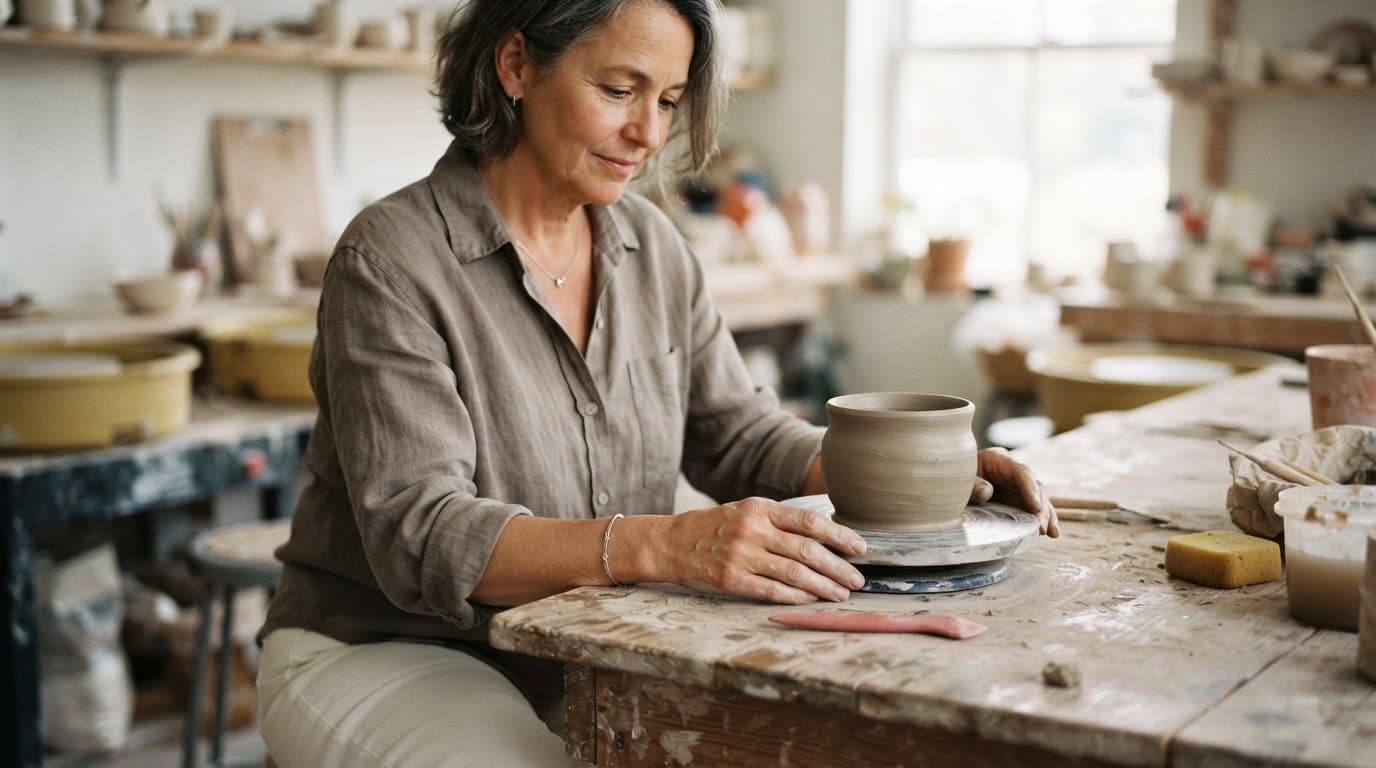
If you love stories, try a library book club. If you miss being creative, sign up for a pottery, painting, or floral-design class. If you want more movement, look for a walking group, beginner pickleball session, yoga class, or a volunteer shift at a local garden.
The activity takes some pressure off. You don’t have to sit across from a stranger and manufacture conversation. You already have something to talk about.
Maybe you ask, “Have you done this class before?” Maybe you laugh together because your clay bowl is looking more like a pancake. It doesn’t have to be polished. It only has to be real.
For women who feel disconnected or unseen, finding community spaces can be a beautiful first step back toward belonging. A shared purpose gives you something sturdier than small talk.
You might also consider:
- Volunteering at an animal shelter, food pantry, hospital, or museum through regular volunteer work
- Joining local community groups, neighborhood gatherings, or meetup groups
- Participating in social activities and continuing education courses through a local college
- Attending events at your library, YMCA, senior center, or community garden
Pick something you would enjoy even if no friendship came from it right away. That matters, and it forms the foundation of building community. You deserve hobbies and experiences that make your own life feel fuller.
Turn a Pleasant Chat Into an Actual Friendship

A lovely conversation is a beginning, but adult friendships need a second moment. This is the part many of us skip.
You might enjoy talking with someone at a class for three weeks, then assume she isn’t interested because she hasn’t called. But she may be thinking the same thing. She may be waiting for you. Stepping slightly out of your comfort zone to bridge that gap is often what brings new friends into your life.
I try to make the next step easy and specific. “Would you like to meet at the cafe near the library next Tuesday at 10?” works better than “We should get together sometime.”
A clear invitation saves both of you from the vague promise that never finds a date.
If she says yes, keep it simple. You don’t need to clean your house, plan a perfect outing, or tell your whole life story. Meet for coffee. Walk through a park. Browse a farmers market. Sit on a bench after a class.
Then follow up afterward. A short text like, “I had such a nice time talking with you today,” carries more weight than people realize. Nurturing adult friendships often starts with these small interactions and making connections through shared experiences.
Friendship is built through small returns. You reach out. She responds. You remember her doctor’s appointment, grandchild’s recital, new job, or upcoming trip. She remembers something about you, too. That is how trust begins to grow, eventually leading to lasting new friends.
If you’re feeling a little rusty, making friends after 50 can remind you that connection often asks for more intention in this season. That isn’t a failure. It’s a new skill.
Let Rejection Be Information, Not a Verdict
Not every invitation will become a friendship. Someone may be busy. She may already have a full schedule. She may be kind, but not available in the way you hoped. Navigating this in middle age can sometimes trigger unexpected feelings of loneliness and isolation.
That can sting. I know.
Still, a “no” doesn’t mean you are unlikeable or that you should stop trying. It means that person wasn’t the right fit, or it wasn’t the right time. Those are different things. And when a friendship does end, even one you thought was steady, healing from a friendship breakup in midlife is its own tender work.
When I feel discouraged, I remind myself that friendship should feel mutual. You shouldn’t have to keep sending messages into a silent room. Look for women who respond, suggest plans, ask questions, and seem glad to see you.
Give people grace, but don’t abandon yourself.
A quiet outdoor walk can help when your feelings get tender. Fresh air and a few minutes away from screens won’t solve everything, but they can support your mental health and physical health while you continue building meaningful social connections.
Make Friendship Part of Your Regular Self-Care
Friendship isn’t an extra for the days when everything else is done. For many of us, everything else is never done.
I treat connection as part of my care, right alongside rest, nourishing food, movement, and time to breathe. Protecting your social health is essential, especially when navigating complex midlife transitions. Sometimes that means scheduling a call. Sometimes it means sending the text before I can overthink it.
If you want to make friends midlife, choose a rhythm you can keep. Participating in simple social activities and building community as part of your routine supports long term social health during major midlife transitions. One coffee date a month. One weekly class. One invitation every other week. This isn’t about being busy. It’s about making room for the kind of connection you want.
The friendships that last usually aren’t built through dramatic gestures. They’re built in ordinary moments, one shared walk, one honest conversation, one “thinking of you” text at a time.
A Gentle Next Step
You aren’t behind because making friends feels awkward. You are human, and navigating major life transitions in middle age takes patience.
Start where you are. Choose one place to return to, one person to talk with, and one simple invitation to offer. Expanding your social circle with meaningful friendships can begin with something wonderfully ordinary.
The next chapter of your life still has room for new people, new laughter, and the comfort of being known.
Frequently Asked Questions
Is It Normal to Feel Lonely in Midlife?
Yes. Midlife transitions often bring big changes in family life, work, health, location, and daily routines. Dealing with loneliness and isolation in middle age isn’t proof that you’ve done something wrong, as it is often a sign that you need more connection and support.
How Long Does It Take to Make a New Friend After Fifty?
There isn’t a set timeline. Building meaningful social connections may take months of casual conversation before it feels natural to share more. Consistency matters more than speed, so keep showing up and let trust grow at its own pace to support your overall social health.
What if I’m Shy or Socially Anxious?
Start with low-pressure settings where an activity gives you something to focus on. A walking group, volunteer shift, book club, or class can feel easier than a large party. One kind conversation is a meaningful place to begin.