Strength Training After 50 Without a Gym
You don’t need a gym membership, fancy machines, or a closet full of equipment to feel stronger in your own body. Strength training after 50 can begin in the exact space where you make coffee, fold laundry, and kick off your shoes at the end of a long day.
I know starting can feel a little intimidating, especially if physical activity has been on the back burner. But your next chapter doesn’t need an extreme plan. It needs a few steady movements, a safe place to practice them, and the willingness for older adults to begin where they are.
Key Takeaways
- Building strength at home can start with a sturdy chair, a wall, a staircase, and simple body weight exercises.
- Focus on everyday movement patterns like sitting, standing, pushing, stepping, balancing to help prevent falls, and carrying.
- Two short sessions a week are plenty for a beginner. Consistency matters more than doing too much too soon.
- Slow, controlled repetitions using proper form often work your muscles better than rushing through a long workout.
- Sharp pain, dizziness, chest discomfort, or unusual shortness of breath are signs to stop and get medical guidance.
Why Muscle Matters More Than a Smaller Size
I don’t see strength work as punishment for having a body that has changed. I see it as a way to keep showing up for my life with more freedom, more energy, and more confidence.
Strong legs make stairs feel less like a negotiation. A stronger back and arms help when you carry groceries, lift a suitcase, garden, or scoop up a grandchild. Good balance and support for joint health can make you feel steadier when the sidewalk is uneven or the dog suddenly changes direction.
After 50, muscle mass can decline with age if we don’t use it, a gradual process known as sarcopenia. This shift also impacts bone density, making targeted movement vital for overall longevity. That doesn’t mean you’re headed toward weakness. It means your body is asking for a reason to keep that muscle. Give it one.
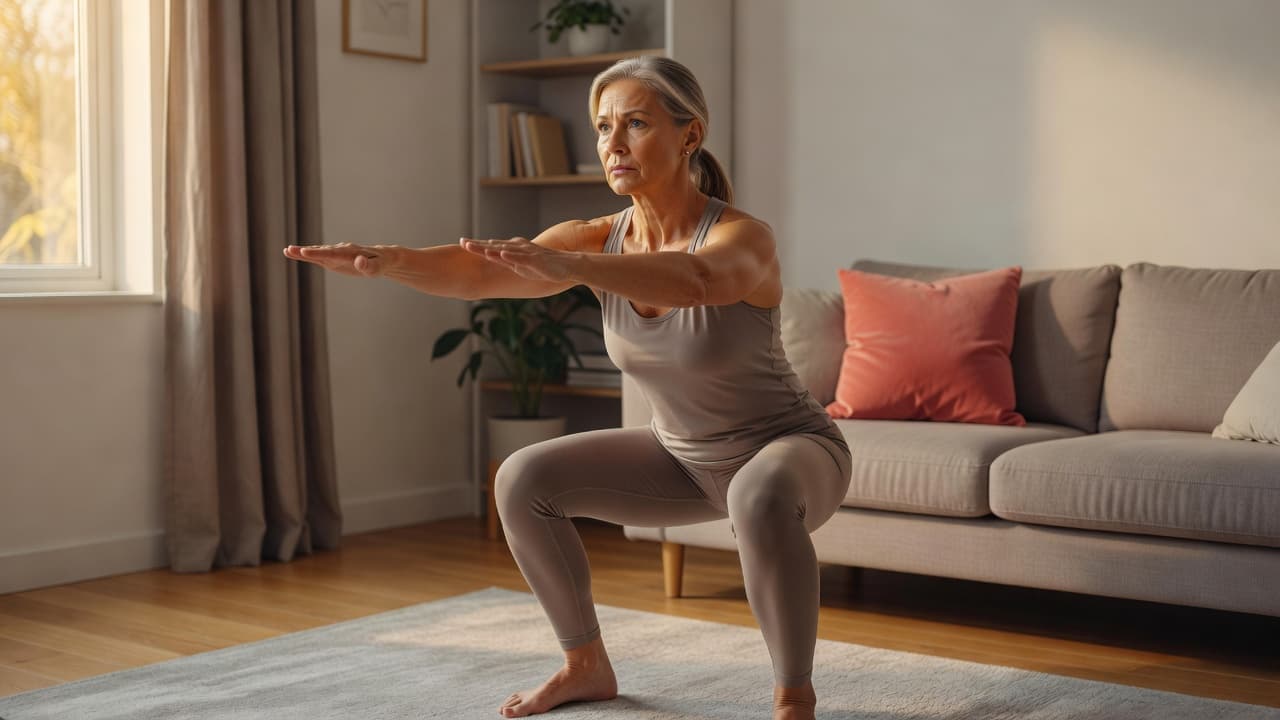
A home routine is also wonderfully practical. There is no commute, no waiting for equipment, and no pressure to look like you know what you’re doing. You can move for 15 minutes in leggings, pajamas, or whatever feels comfortable.
The goal isn’t to leave yourself exhausted. The goal is to make daily life feel more manageable because your body has practiced being strong.
If you’ve been taking stock of what you want your next season to look like, these honest questions for women over 50 can be a meaningful place to begin. Physical strength is part of building a life that feels like your own.
Strength Training After 50 Without a Gym: Start With These Movements
The most useful exercises aren’t complicated. They copy movements you already need in real life. I like to build a simple session around squats, a push, a step, a hip movement, some core support, and balance as part of an effective resistance training plan.
Stanford Lifestyle Medicine includes chair squats, step-ups, hip hinges, resistance-band rows, and chest presses in its guidance for women 50+, often using three sets of eight repetitions. You don’t have to begin there, though. One controlled set of reps is a perfectly good beginning for strength training after 50.
Here is a simple at-home routine to try two days a week, with at least a day of rest between sessions.
| Movement | How to Do It at Home | Starting Point |
|---|---|---|
| Chair sit-to-stand | Sit on a sturdy, non-rolling chair. Stand without using your hands if you can, then lower slowly. | 6 to 8 reps |
| Wall push-up | Place your hands on a wall, step back, bend your elbows, then press away. | 6 to 10 reps |
| Step-up | Step onto the bottom stair or a low, stable step. Step down slowly. | 6 reps per side |
| Glute bridge | Lie on your back with bent knees. Lift hips gently, pause, and lower. | 8 reps |
| Calf raise | Hold a counter for support and lift your heels. Lower with control. | 8 to 10 reps |
| Standing march | Hold the back of a chair and bring one knee up at a time. | 8 reps per side |
A chair squat may look simple, but don’t underestimate it. Sitting down and standing up with control works your thighs, hips, and core. Keep your feet planted, let your knees track in the same direction as your toes, and avoid dropping quickly into the chair.
Wall push-ups are a kind place to start for your chest, shoulders, and arms. As you get stronger, move your feet farther from the wall. Later, you can use a kitchen counter for a slightly bigger challenge. This 20-minute bodyweight workout for adults over 50 includes chair squats and incline push-ups if you’d like to see those basics in action.
Make the Movements Work Harder, Not Faster
Once a routine feels familiar, it can be tempting to race through it. I wouldn’t. Slow movement is where so much of the strength-building magic happens, and it is one of the best ways to build muscle without needing to visit a facility.
Take three seconds to lower into the chair. Pause for a breath. Stand with intention. That extra control gives your muscles more work without requiring heavier equipment or a longer workout.
When strength training after 50 starts feeling easier, change only one thing at a time:
- Add two repetitions to an exercise.
- Complete a second set after a short rest.
- Slow the lowering portion of each movement.
- Use a slightly lower counter for push-ups.
- Add resistance bands or light weights for rows or side steps.
You don’t need to make every workout harder. Some days, maintaining your routine is the win. Life is full, sleep can be unpredictable, and menopause can bring its own surprises. A gentle session still counts, and knowing which exercises to avoid when you are fatigued is just as important as knowing what to push through.
If you want another visual refresher, this bodyweight exercise guide offers ideas for building strength with no machines at all. Choose movements that feel appropriate for your body, not somebody else’s highlight reel.
Create a Routine That Fits Real Life
The best workout plan is the one you can keep doing when life gets busy. I like to attach movement to something that already happens. Maybe you do chair stands while the coffee brews. Maybe wall push-ups happen after you brush your teeth. Maybe you practice step-ups before your evening shower.
That may sound small, but small is how habits take root. Combining your home strength routine with light aerobic exercise, like a daily walk, can also boost your overall cardiovascular health. Paired with adequate protein intake to support muscle recovery and general wellness goals like sustainable weight loss, this approach builds a foundation for lasting vitality.
Set out a pair of supportive shoes. Keep a light resistance band in a basket near the sofa. Put a chair near an open space where you won’t trip over a rug or a curious pet. Make the good choice the easy choice.
I also want you to release the idea that you must feel motivated first. Most of us don’t wake up excited to do calf raises. Start anyway, and let the feeling catch up. Taking small steps at 50 applies here too. Five minutes of movement can be the beginning of a stronger week.
Listen to Your Body Without Talking Yourself Out of Progress
Muscle effort can feel unfamiliar. A little shaking during the last few repetitions, warm muscles, and mild soreness the next day can happen when you try something new. Sharp pain is different. So is pain that gets worse with each repetition, especially if you are not using proper form.
Stop and seek guidance from a qualified clinician or physical therapist if you have chest pain, dizziness, sudden shortness of breath, a recent injury, or concerns about osteoporosis, joint replacement, or another medical condition.
Use support without shame. Hold the counter during calf raises. Keep one hand on a chair during marching. Do smaller step-ups. Your body does not get a gold star for struggling without help.
Strength training after 50 is not a test of toughness. It is practice, and practice gets more comfortable.
A Stronger Next Chapter
Your body is not done learning, adapting, or surprising you. A chair, a wall, a few stairs, and a little patience can help you build real strength right where you are through accessible strength training.
Start with one session this week. Then come back for another. Those ordinary repetitions can become a beautiful way of saying, “I still have places to go.”
Frequently Asked Questions
How Many Days a Week Should You Strength Train After 50?
I recommend starting with two nonconsecutive days of strength training each week. That gives your muscles time to recover and helps the habit feel doable. When that feels comfortable, you can add a third day or take longer walks on the days between.
Can Bodyweight Exercises Build Strength After 50?
Yes. Chair stands, wall push-ups, step-ups, bridges, and controlled balance work can challenge muscles without weights. For specific drills you can practice at home, try these best balance exercises for women over 50. As your strength grows, add more reps, slow your pace, change the angle, or introduce resistance bands.
What If Squats Hurt My Knees?
Start with a higher chair and a smaller range of motion. Keep your knees in line with your toes, move slowly, and use your hands for support if needed. If you have persistent or sharp knee pain, pause that movement and ask a medical professional or physical therapist for advice.