Hobbies After 50 When Nothing Sounds Interesting
Does every hobby suggestion sound like one more thing you’re supposed to enjoy? When you’re exploring hobbies after 50, I recommend starting with a little curiosity, even if excitement hasn’t shown up yet.
Let’s make room for something that fits your energy, your budget, and the woman you are now.
Key Takeaways
- Choose the feeling you’d welcome first, whether that’s calm, company, movement, or a small accomplishment.
- Try one hobby for 15 to 20 minutes a few times a week. That’s a manageable starting point, not a rule.
- Borrow supplies or use what you already own before buying equipment.
- Adapt activities around sore hands, tired shoulders, and limited mobility. Pain doesn’t belong on your list of achievements.
- Give yourself permission to enjoy something independently of your partner or family.
- Notice how you feel afterward. A modest lift in your mood is worth paying attention to.
Choosing Hobby Ideas That Fit What You Need
Match Your Energy and Your Need for Company
I wouldn’t begin with a long bucket list when even choosing dinner feels exhausting. Start with one question: Would some quiet, movement, or friendly conversation feel welcome today?
If you’re tired of making decisions, a puzzle offers a clear task. If your days feel too empty, especially when loneliness is part of them, a recurring book club gives you somewhere to go and familiar faces to see.
For over-50s, preferences can change after caregiving, retirement, or an empty nest. My thoughts on rediscovering what you want can help you make space for interests that belong to you.
Begin With a Small Moment of Joy
When nothing appeals, I’d make the Daily Joy Practice your first small step. Notice one pleasant moment today, then consider whether an activity might give you more of it.
Perhaps you linger over flowers or enjoy a conversation about a book. Those small responses offer clues for finding joy in midlife, without demanding an immediate passion.
My free Self-Care Journey Starter offers a gentle starting point if you’d welcome a little support making time for yourself.
Quiet Hobbies for Low-Energy Days
1. Reading and Book Clubs
Borrow a short novel, essay collection, or audiobook through your library. Give reading ten minutes, and choose a subject you enjoy rather than a book you feel obliged to finish.
Large-print editions and audiobooks can make reading more comfortable. A library book club adds conversation without requiring you to host, cook, or clean the house first!
2. Writing for Yourself
Start with a notebook you already have and describe one memory, place, or person you’d like to remember. I suggest beginning with five sentences, especially if a blank page feels intimidating.
Writing gives your thoughts somewhere to settle and lets you revisit details you might otherwise forget. If holding a pen hurts, use your phone’s voice-to-text feature and edit later.
3. Jigsaw Puzzles
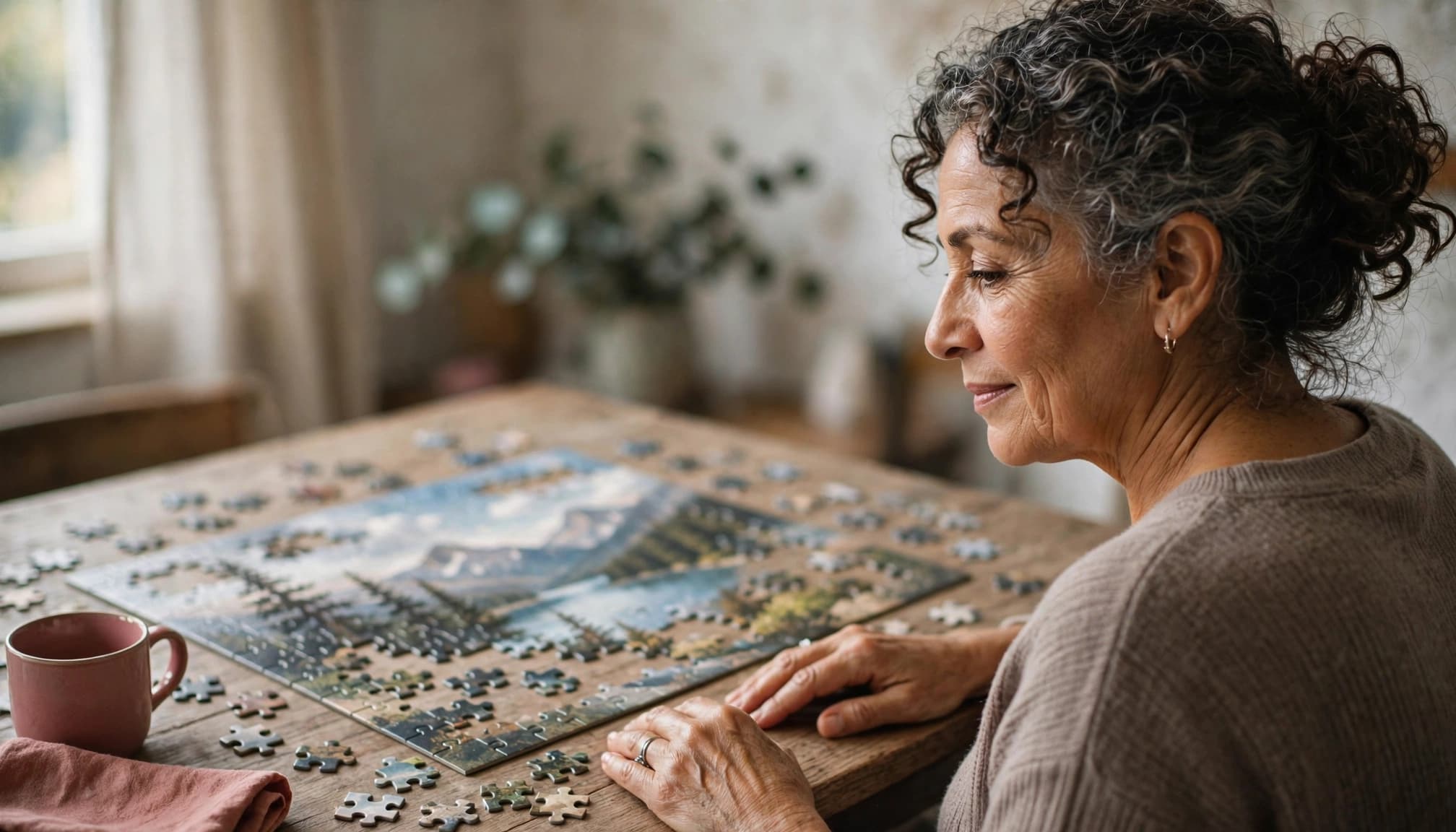
Choose a smaller puzzle with a picture you genuinely like. Sort the edge pieces first, then work on one recognizable section for 15 minutes.
Larger pieces can be easier to see and handle. Keep jigsaw puzzles on a tray so you can put them away without losing your progress, and borrow or swap puzzles before building a collection.
Creative Hobbies You Can Grow Into
4. Knitting or Crochet
Knitting uses two needles, while crochet uses one hook. Both are portable, and a small knitting or crochet practice square is a friendlier beginning than a sweater with complicated instructions.
Borrow the basic tools and use leftover yarn for your first attempt. For knitting, smooth, medium-weight yarn is easier to see and handle. If your hands get sore, choose comfortable handles, support your forearms, and stop before discomfort builds.
5. Painting or Drawing
A pencil and scrap paper are enough to begin painting or drawing. Sketch a leaf, a teacup, or the view through your window, without expecting it to look ready for a frame.
I like thinking of creativity as a muscle that strengthens through repetition. Each crooked line tells you something useful about looking, proportion, or pressure, and you can try again tomorrow.
6. Model Building
A simple snap-fit model kit gives you a project with a clear beginning and finish. Sorting pieces and following instructions calls on coordination, dexterity, and patience.
Choose larger components if tiny parts frustrate your hands or eyes. Working alongside a grandchild can make this a shared hobby, provided the kit suits their age and you have no deadline.
Activities That Fit Around Home and Everyday Life
7. Gardening in a Small Space
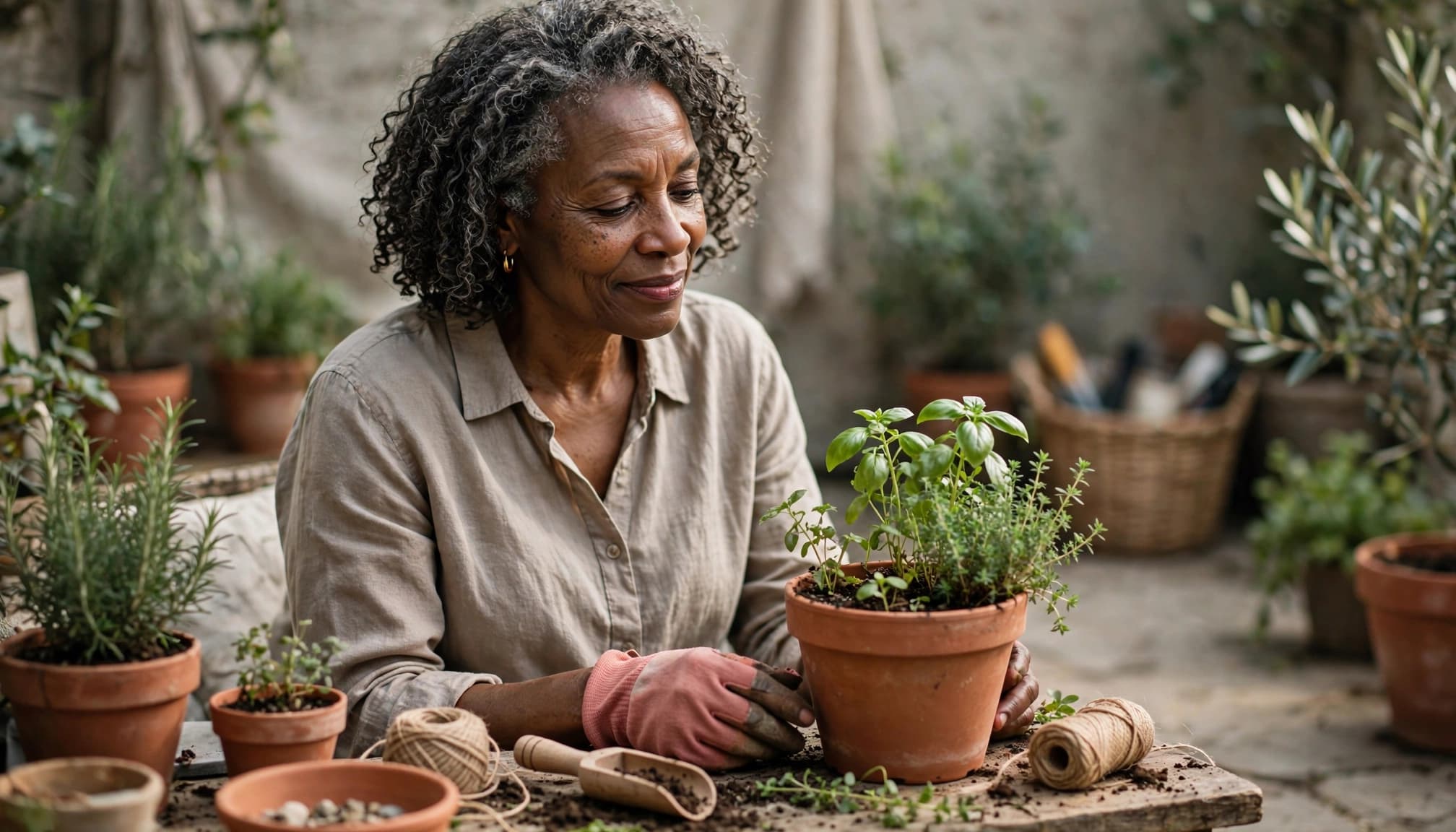
Start gardening with one herb in a pot, using a container you already have with drainage holes. A tabletop planter or raised bed can reduce bending and kneeling.
A 2019 study involving 41 older people found changes in blood markers linked with brain health after 20 minutes of gardening. It didn’t measure improved memory, stamina, or dexterity from that single session, so I’d choose gardening for the pleasure of tending something.
8. Cooking Something You Choose
Pick one recipe because it sounds delicious to you. A new soup, simple bread, or unfamiliar vegetable can make cooking feel different from the daily responsibility of feeding everyone.
Use equipment you already own and choose a recipe with few ingredients. For sore joints or limited stamina, sit for preparation and choose dishes that need little chopping or stirring.
9. Phone Photography
Take three photographs during an ordinary day: perhaps a flower, an interesting doorway, or sunlight on your kitchen table. Your existing phone is enough, and the first goal is learning to notice.
Choose one photograph you like and consider what caught your attention. A beginner photography class can add structure later, while seated photography works well when walking distances are difficult.
Hobbies for Movement, Connection, and Discovery

10. Walking or Nordic Walking
Start with a comfortable ten-minute route. The NHS guidance on exercise benefits says people over 65 spend ten hours or more daily sitting or lying down. Prolonged inactivity raises risks, including obesity and heart disease.
Nordic walking uses specially designed poles and a learned technique. Poles don’t guarantee less knee strain, so get professional advice if joint pain or balance difficulties affect you.
11. Volunteering With a Shared Purpose
Choose one manageable volunteering role connected to something you care about, such as books, animals, or growing food. A seated library task may suit you better than a physically demanding shelter shift.
Regular attendance gives conversations time to become familiar, which may help if loneliness is a concern. For more ideas about making friends after 50, I recommend activities where you have something to do together.
12. Video Games
Try video games on a device you already own before buying a console. Choose a puzzle or exploration game you can pause, with controls you can learn at your own pace.
A 2015 study of video games by Gregory Clemenson and Craig Stark found improved memory-task performance among college students who played Super Mario 3D World. It didn’t establish that games prevent memory loss in older people, though they can still offer entertainment and a satisfying challenge.
Give One Hobby a Two-Week Tryout
I suggest choosing one activity for a low-cost two-week trial to see whether a new hobby suits you. Set a spending limit you can comfortably afford, and wait on expensive equipment or year-long memberships until you know you’ll continue.
- Schedule three short sessions during the first week, using borrowed supplies or things you already own.
- After each session, notice your mood, physical comfort, and whether any part held your attention.
- During week two, revisit your hobby ideas by repeating the enjoyable part or adjusting one detail, such as project size, seating, or company.
A recurring library group, YMCA class, or walking club can help if you prefer company. You can build these appointments into a flexible retirement routine without filling every open hour.
For adults 65 and older, the CDC’s activity recommendations include at least 150 minutes of moderate activity weekly, alongside strength and balance work. A walking hobby can contribute, with activity adjusted to your ability.
My Ultimate Self-Care Guide is there if you’d like more support protecting time for yourself. Your hobby deserves a place before the week’s obligations consume every available minute.
FAQs About Starting Something New
Can a Hobby Become Enjoyable Even Without an Immediate Spark?
Yes, enjoyment can develop as the unfamiliar parts become easier. I recommend looking for modest signs, such as wanting another turn or noticing that time passed pleasantly.
What if a Partner Wants Every Activity to Be Shared?
You can care about your relationship and enjoy separate interests. Explain that you’d like some personal hobby time, then keep a shared activity you both look forward to.
Is It Okay to Leave a Class That Isn’t a Good Fit?
Absolutely, although one awkward first session may deserve another chance. If the pace, atmosphere, or physical demands continue to feel wrong, choose another setting without treating the experience as a failure.
When Does Having No Interest Need More Than Hobby Suggestions?
If losing interest affects most of your life for two weeks or longer, speak with a healthcare professional. Changes in sleep, appetite, mood, or daily functioning are also reasons to seek support rather than push yourself harder.
Let a Little Curiosity Lead the Way
Choosing hobbies after 50 can begin with something as ordinary as a library book or one pot of herbs. I hope you’ll give yourself permission to try, adapt, and choose again without needing an impressive result.
Set aside one small pocket of time this week for the option that feels easiest to approach. A little enjoyment is enough reason to return.